La Fête de la Musique: The Story Behind World Music Day

Now that it’s officially June (and in my mind, summer), we are 20 days away from la Fête de la Musique! Translated to World Music Day in English, this day is a celebration to encourage making music accessible for all, with free, live performances in public spaces.

A Little Bit of History

The history of this day takes us back to 1976, when American Joel Cohen, who at the time was working for Radio France, had proposed to create ‘Saturnales de la Musique’. His idea was that music groups could play on the evening of June 21 and December 21, on the two solstices.

As a result, a festival was held in Paris and Toulouse, France on June 21, 1976. Years later in 1981, remembering its wide success, the former French Minister of Free Time (Ministère du Temps Libre) André Henry decided to bring back the idea to celebrate the arrival of François Mitterrand in the French government.

This time, when hundreds of thousands of people participated, the day’s popularity was clear. Jack Lang, former Minister of Education, and Maurice Fleuret, a composer, then permanently worked to declare this day a public event to happen each year on June 21.

The first official edition of La Fête de la Musique was thus held on June 21, 1982 – marking the summer solstice – the longest day of the year in the Northern Hemisphere.

At the beginning, the day was called ‘Faites de la Musique’, which means ‘Make Music’, to encourage all artists, from amateur to professional, to get involved. Thousands of musicians performed in streets, parks and other spaces across France, throughout the many hours of daylight and continuing through the night.

Becoming a Part of French Culture

Beyond celebrating music, this day has grown to have deep cultural significance. It is a day to celebrate inclusion and shine light on different kinds of music and people. Regardless of age, gender, and origins, generations and cultures unite for a shared evening of festivities. The profound inclusivity and accessibility of this day have made a social impact on French culture.

Promoting Collaboration

In addition to its social, economic and cultural impact, La Fête de la Musique promotes new, and sometimes unlikely, collaborations. Between artists, artists and venues, and even across industries, this day provides an opportunity for creative partnerships. Each year, new collaborations are made. Institutions, cultural venues, associations and businesses enable artists to reach new audiences and share the joy of music with all.

A Global Expansion

Soon after its creation, World Music Day quickly spread to other countries. Today, it is celebrated in over 100 countries and over 500 cities – it is a truly international event.

Across the globe, it stands as a testament to the power of music to bring people together.

To see the 2025 program in France, click here. Until next time!

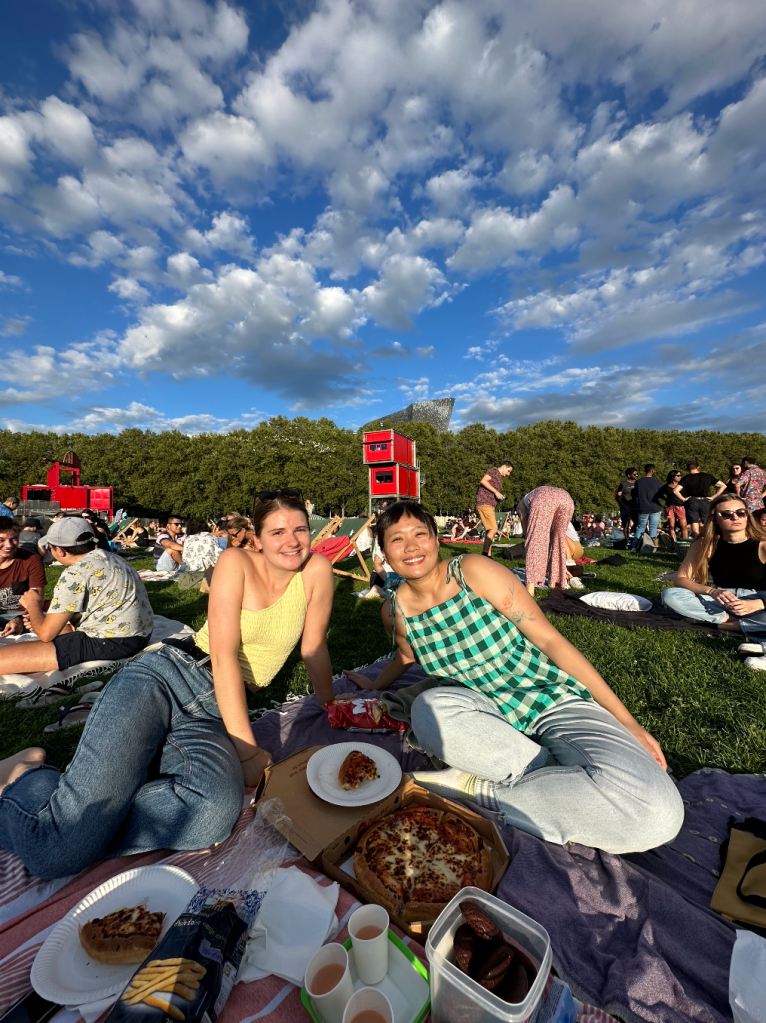
Fête de la Musique 2024

A Taste of Culinary Innovation in France: Sirha Lyon 2025

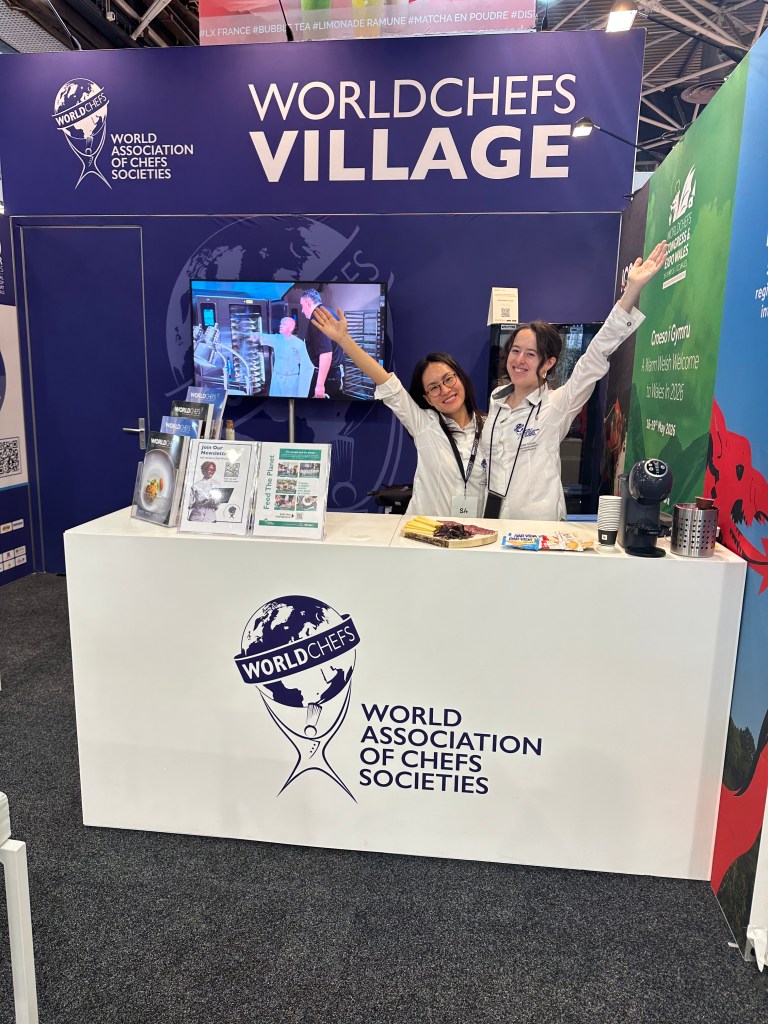
This past week I had the chance to travel to Lyon, France, for an exciting 5 days at a food service and hospitality trade show called Sirha Lyon. Alongside three of my colleagues, we spent our days running a 65m2 booth that was brought to life by 5 of our organization’s partners.

Like any trade show, the 5 days were certainly exhausting – the loud expo halls, constant conversations, and being on your feet all day definitely contributed to that. Still, I was having the time of my life! As Communications Coordinator at Worldchefs, I was able to interact with our partners, tasked with creating content that would appeal to both the partners themselves and our audience of chefs and hospitality professionals.
Worldchefs is a federation of chef associations around the world, kind of like the UN of chefs 🙂 We have educational initiatives, networking events, and competitions (that we host or endorse) with the aim of elevating the standards of global cuisines.

Responsible for Worldchefs’ communications channels, which includes social media platforms, the challenge always remains that it is hard to showcase food and chefs from around the world while spending each day in our office in central Paris. You have to interact at distance with chefs in the Americas, Africa, Asia, Europe, etc.- to hopefully receive content to edit or share. Going to Lyon where I’d have 5 days of access to chefs and industry experts, I knew my mission – film and photograph everything. I prepared every creative idea I could think of before going to ensure that I could maximize this opportunity to get content.

Sirha Lyon was the largest tradeshow I’ve ever been to – it had 7 halls that welcomed over 257,000 people over the course of the event. In each hall, there was a different theme, such as kitchen equipment, confectionery, wine & spirits, and more. We were located in the food hall, meaning our stand was frequented by lots of hungry visitors.

Sirha Lyon is also the home of Bocuse d’Or, one of the most prestigious culinary competitions in the world. I was luckily able to receive a media pass for the entirety of Sirha Lyon, meaning I could get up close at the competitions, in the private media section. This was super helpful because I could interview competitors, speak with judges and coaches, and have ‘exclusive’ content that ended up doing really well on social media!
Despite the huge number of attendees at Sirha Lyon, I found that almost 100% of the conversations were in French, as the majority of attendees seemed to come from some part of France. This was great, because I was able to practice French for several days! Working for an international organization, sometimes there are days where I don’t need to use French, so it was nice to have a bit of practice.

Overall, my first work trip in France was a great success – I met many new people, had a great time working on the communications, and even got to explore a bit of Lyon! I’m already looking forward to the next time I’ll get to travel for work.

Stay tuned for next week’s article 🙂

25 things to do in Paris

Recently, a few people have reached out to ask for my recommendations when they are coming to visit Paris. With 2.5 years under my belt of living here, I definitely have some favorite things to see and do. 

In honor of turning 25 yesterday, here are my top 25 recommended things to do during your visit to Paris: 

During All Seasons –

  • Atelier des Lumières: This is one of my favorite ‘museums’ in Paris. They have various artists in different seasons that will be displayed in this big room on the walls, floors and ceilings. It’s encaptivating, with music playing around you and the art filling the space and moving across the room. You can easily sit there for an hour or two, mesmerized by the work or even people-watching. 
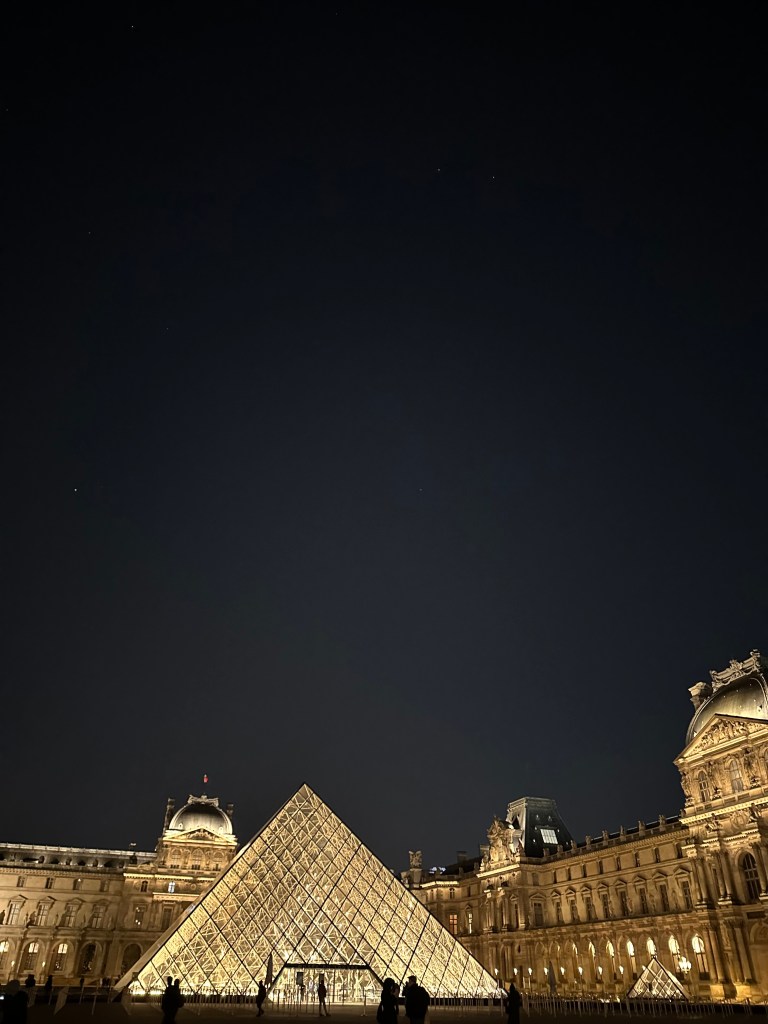
  • Le Louvre at night: I recently went to the Louvre on a Friday evening (18h30) and it was so much fun. The Louvre is much quieter at night and there were even moments where I was alone in different rooms! It was so cool and made exploring this endless museum all the more exciting. 
  • Speakeasies: Paris has so many hidden bars and speakeasies. While I certainly have not been to them all, two of my favorites are Lavomatic and Candelaria.
  • Galeries Lafayette rooftop: This is an expensive department store in the 9th arrondissement of Paris. While shopping here is not on my list of affordable activities, going on the rooftop is free and certainly worth the visit! 
  • Brocantes: Paris has so many brocantes, or flea markets, all over the city. Even when not buying or searching for something specific, just browsing through the markets can be such a fun way to spend a few hours while here. The application vide-greniers has a list of upcoming markets or a simple Google search would provide options, too.
  • Thrift shopping: Especially for younger people, thrift shopping is a great way to find new, affordable clothing items. Le Marais district in Paris has several thrift stores, and sometimes you’ll even find designer pieces!
  • Luxembourg Gardens / Rue Mouffetard: In the 5th arrondissement you can explore the Luxembourg Gardens (jardin du luxembourg) and even picnic in nice weather. About a 10-minute walk away is one of my favorite streets in Paris, rue Mouffetard, a cute street on a hill filled with places to eat crêpes. 
  • Performances: I’d be remiss if I didn’t mention all of the opportunities there are to see live performances in Paris. The art scene is so vibrant in Paris between the more well-known performances like the Opera to all of the small theatres and venues you can attend for the performing arts. A definite must-do!
  • Sacre Coeur: This basilica sits on top of the Montmartre hill in Paris in the 18th arrondissement. Climbing up to the top of the hill, not only does Sacre Coeur offer one of the best panoramic views of Paris, but it’s another beautiful church to see on the inside. For 7 euros, you can also climb around 300 steps inside Sacre Coeur to see the view from the very top! 
  • Bateaux Mouches: While in Paris, I would absolutely recommend taking a boat tour of the city, especially at night. This is certainly one of the most touristy things to do in Paris, but worth it to have a different perspective and views from the water. 
  • Eiffel Tower twinkling: The tower twinkles each night starting when it gets dark – every hour on the hour until five past (ex. 21h00 to 21h05)! I believe it stops around midnight. I’ll never get sick of this!
  • Cabaret in Pigalle: The Pigalle area in the 18th arrondissement of Paris is known for cabarets, particularly the Moulin Rouge. It certainly is a pricey activity, but it’s a show people come to see from across the globe and would definitely make for a fun night out. 
  • Notre Dame: I am so excited to do this. Notre Dame caught fire in 2019 and has just reopened this past week to the public. Tickets are hard to come by, but I’m hoping in the early new year I’ll be able to go!

Seasonal activities-

Summer:

  • Picnic on champ de mars (behind the Eiffel Tower)
  • Wine on les quais de la Seine (the platforms along the Seine river)
  • Musée Rodin – a beautiful museum with a park outside
  • Parc Monceau – one of the most beautiful parks in Paris!
  • Parc des Buttes Chaumont – another huge park to visit or picnic at
  • People watching on a terrace along Canal Saint-Martin – join the Parisian locals along Canal Saint-Martin in spring and summer
  • Versailles – I’d recommend visiting the Palace of Versailles in the spring or summer because in addition the palace itself, the gardens are so beautiful!
  • Paris Longchamp – Each spring, the Paris Hippodrome has horse races, on the course called Paris Longchamp. People go to place bets on the horses, and you can find 15 euro tickets to go and watch.

Winter:

  • Galeries Lafayette glasswalk – Every winter holiday season, the Galeries Lafayette puts up a giant Christmas tree, with a glasswalk out to the tree on an upper level. If you sign up a few days in advance or wait in line on the day of, you can see the tree up close (as long as your not scared of heights!)
  • Refuge des Fondus or make your own – When in France you have to try cheese, and in the winter having fondu is one of my favorite activities to do with friends. My favorite restaurant for this is Le Refuge des Fondus, a place in the 18th arrondissement. Otherwise, when my mom came to visit we made fondu from home which was also not too hard and very fun.
  • Lumières en Seine – Just outside of Paris in Saint-Cloud, there is a Christmas light walk that really gets you in the holiday spirit. A great place for photos, I really have enjoyed doing this in the past.
  • Tuileries Fête Foraine – In the Tuileries garden (jardin des tuileries) there is a festival that happens from November to January each year, filled with rides, food and shopping vendors. While some people avoid this festival due to the crowds, if you find the right times to go it can be a great activity. It’s a great place to try French classic winter foods (raclette, tartiflette, croziflette, aligot, etc.) and of course, the hot wine (vin chaud).

Those are my top 25 – If you’re coming to Paris, let me know if you do any of these recommendations!

Until next week 🙂

Political Crisis Hits France: How Barnier’s Government Collapsed in Record Time and What Might Happen Next…

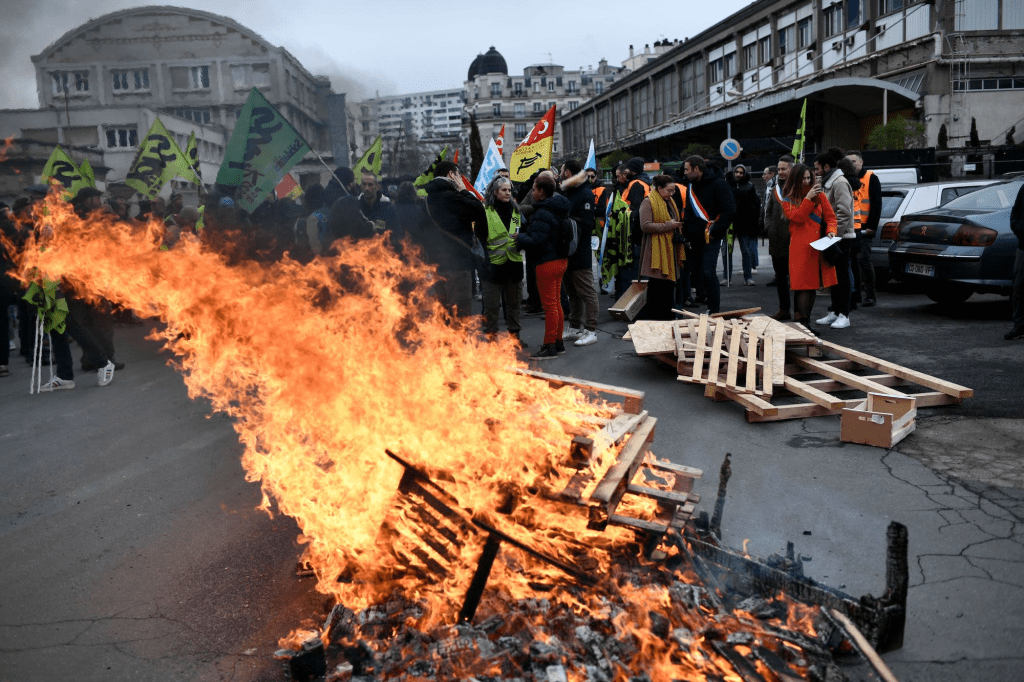
We all remember the political turmoil across France last year after President Emmanuel Macron’s government used Article 49.3 of the French Constitution to bypass a parliamentary vote and pass a controversial pension reform. The law raised the retirement age from 62 to 64 and ignited strong accusations of undemocratic governance, paralyzing the country with strikes and public upheaval. For those who might not remember, here’s a visual reminder: 

Image credit: CNN

Well, the lesson has clearly not been learned… France is now thrown yet again into political chaos after a no-confidence vote has left the country with no Prime Minister. Earlier this week, French Prime Minister Michel Barnier used article 49.3 of the Constitution to adopt his financial project for social security, previously failing to win Parliament support to do so. Angering the left party, the Nouveau Front Populaire (NFP), and the right, Rassemblement National (RN), both sides immediately made motions of no-confidence. A vote was held on the motion from the NFP, and a majority 331 votes now forces Michel Barnier to leave his role as Prime Minister. 

The first no-confidence collapse since 1962. What does this signify? 

Just this past summer, snap elections in France led to no singular party having a majority in the Parliament, causing Macron to nominate Michel Barnier as Prime Minister. Only 3 months later, this no-confidence vote reflects France’s remaining political instability and deepening challenges.

Additionally, it reveals the growing power of the RN, or right-wing party, whose decision to unite with the left in this week’s vote ultimately allowed the no-confidence to succeed. While today no party has the absolute majority in the French Parliament, the RN holding the power as the decision maker in this vote cannot go unnoticed. 

What’s the big deal for France and its people?

This vote took place at a time where the Parliament, composed of the Assemblée Nationale and the Sénat, have not yet voted on the country’s budget for 2025.

With less than 25 days to pass the budget before the new year, it would be almost impossible to create a new budget, and without a budget for 2025 the country has no legal authorization to collect taxes from citizens or to finance government spending. 

No taxes? A miracle! Yet, as you might suspect, it’s not so simple. 

What could happen, instead, is a shutdown of the government, similar to what has happened in the US. 

To complicate the situation even more, as per the French Constitution, a new Parliament election cannot happen for at least another 6 months. With no Prime Minister, President Emmanuel Macron (who is rather disliked across the country) is now left to make choices.

Meanwhile, Macron is facing several pushes to step down as President, but this past Thursday evening on live television he declared that he will complete the duration of his term as planned until 2027. However, the timing of this vote could not be worse for Macron, as it puts a damper on the excitement of Notre Dame’s opening weekend, where he was supposed to regain some public appreciation for his commitment to a timely rebuild.

So, what options does Macron have moving forward?

If you’re still following this far, here are 3 possibilities of what may happen next:

Option 1:

Before December 19, a special law can be passed allowing the government to function temporarily using the budget of 2024, transposed to 2025. The problem with this solution is that when doing so, the budget would not account for inflation, while taxes would. This means that taxes would be higher for around 18 million people in France. From my understanding, the special law would have to be adopted and altered to avoid these consequences.

Option 2:

The second option is called les Douzième Provisoires, a provisional budgeting system used when the government cannot pass the annual budget in time. This approach allows for state spending to continue month-by-month at a rate equivalent to 1/12th of the previous year’s budget. In this way, the government is able to maintain essential services while adding stalling time for the new budget negotiations. 

While this option could work and may be likely, it is a sign of weakness, indicating profound political struggles within the administration.

Option 3:

A third option would be using article 47 of the Constitution. This would allow the adoption of the budget by ‘ordonnance,’ meaning Macron could sign a text and give himself emergency powers to pass a budget. However, this is highly unlikely because it would be considered anti-democratic, as a means of undermining or diminishing the role of the Parliament. If Macron wants to keep any hope of being even slightly liked by the public, he will not go this route.

What will Macron choose? Only time will tell…

Feel free to leave any questions below and stay tuned for next Saturday’s article!

Celebrating Love this October: A French Bachelorette Party & Wedding

Summer 2016 feels like just yesterday – the distinct memory of sitting on the beach with my mom wishing I had a French friend to talk with, to practice my (very poor at the time) French language abilities.

Not even a month later, starting junior year of high school, I found myself in study hall each day wondering why this girl was always looking at my French homework. We didn’t speak, but to my luck, this seemingly strange girl joined Dance Club, where I learned that she was French.

We quickly became friends, and from that point on, Marie and I spent every day in study hall together, helping each other with language homework, taking way too many selfies, and exchanging about our cultures. It was one of my favorite periods of the day.

2016 Study Hall

Little did I know, 8 years later, I’d be living in France and going to Marie’s Bachelorette Party and wedding…

EVJF: The French Bachelorette Party

In France, the Bachelorette party is called an EVJF, enterrement de vie de jeune fille, or the ‘burial of the life of the young girl’. A little morbid, no?

What I’ve been told is that Bachelorette parties in general are not super common in France, but that due to the power of social media and the ‘Americanization’ of the concept in France, they are becoming increasingly popular.

Marie had a Bachelorette exactly like I’d imagine they are in the US. Seven other girls and myself traveled to a town called La Baule to surprise Marie with a weekend filled with activities.

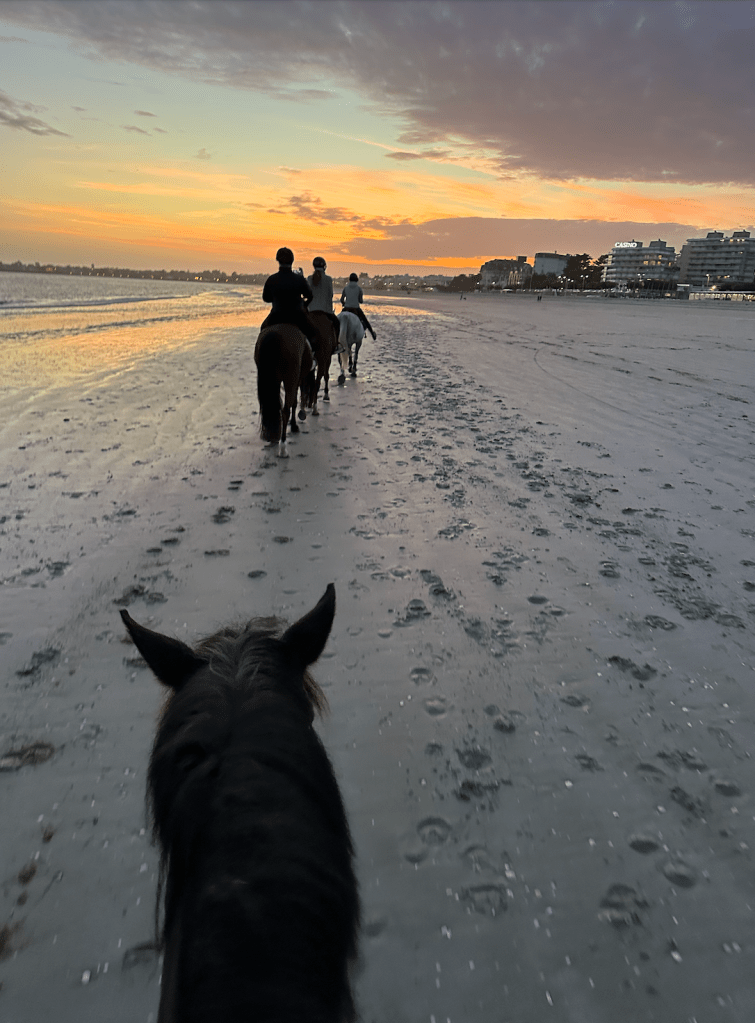
During the 2 days there, we went horseback riding on the beach, tried pole dancing, went to the spa, and ate a lot of good food. It was truly such a fun weekend and it was nice to see all the girls 2 weeks before the wedding. Full French immersion, too!

Wedding Weekend

First, let me just say, since this wedding I’m now convinced that when I get married one day it will be French style.

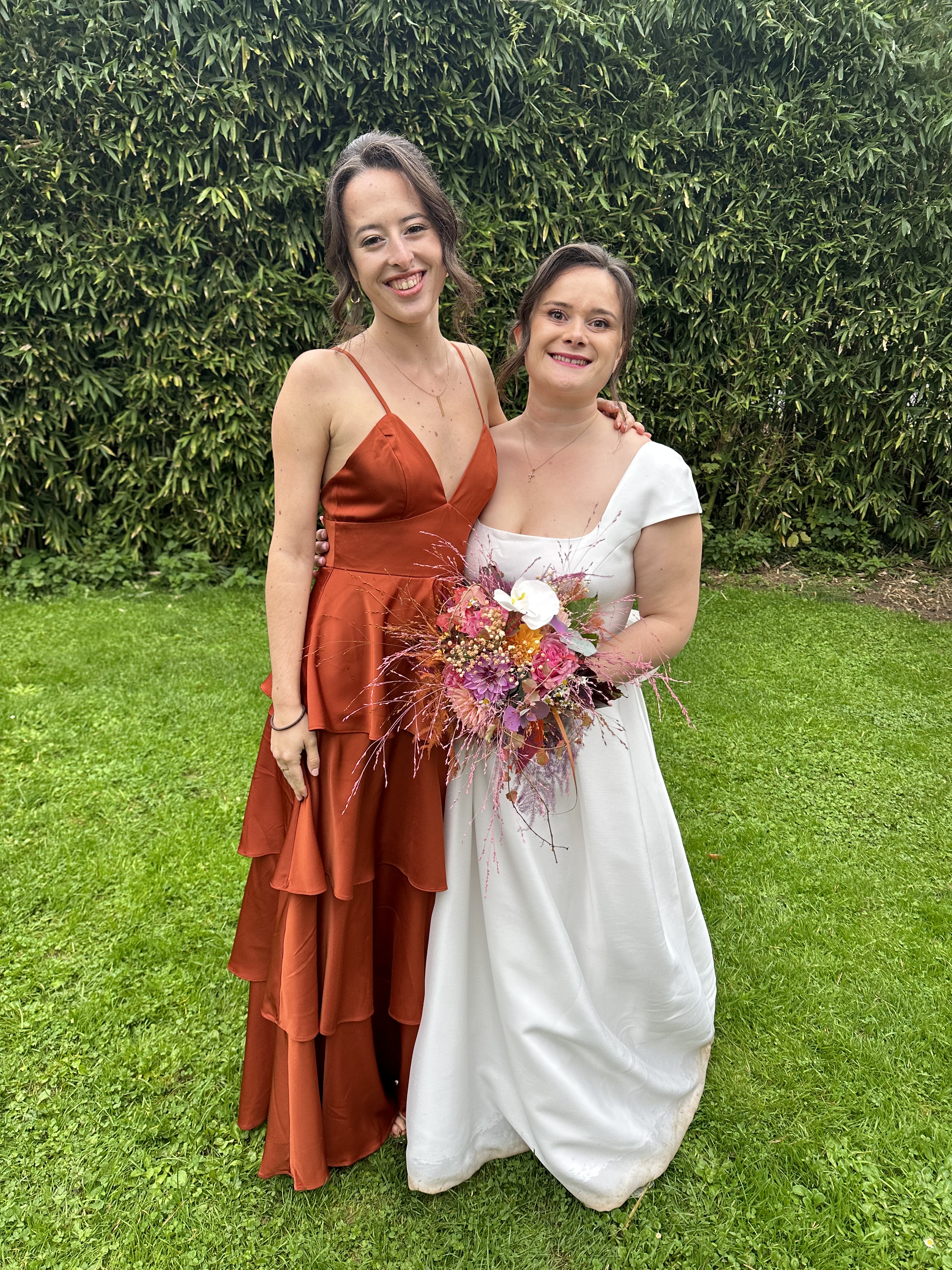
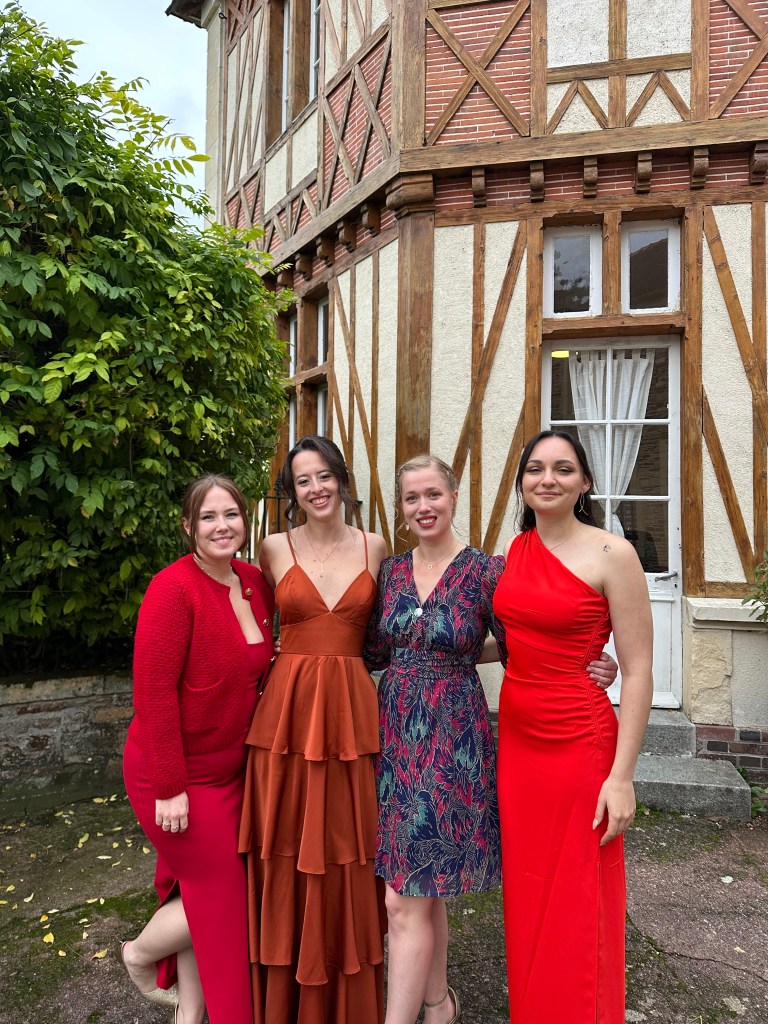
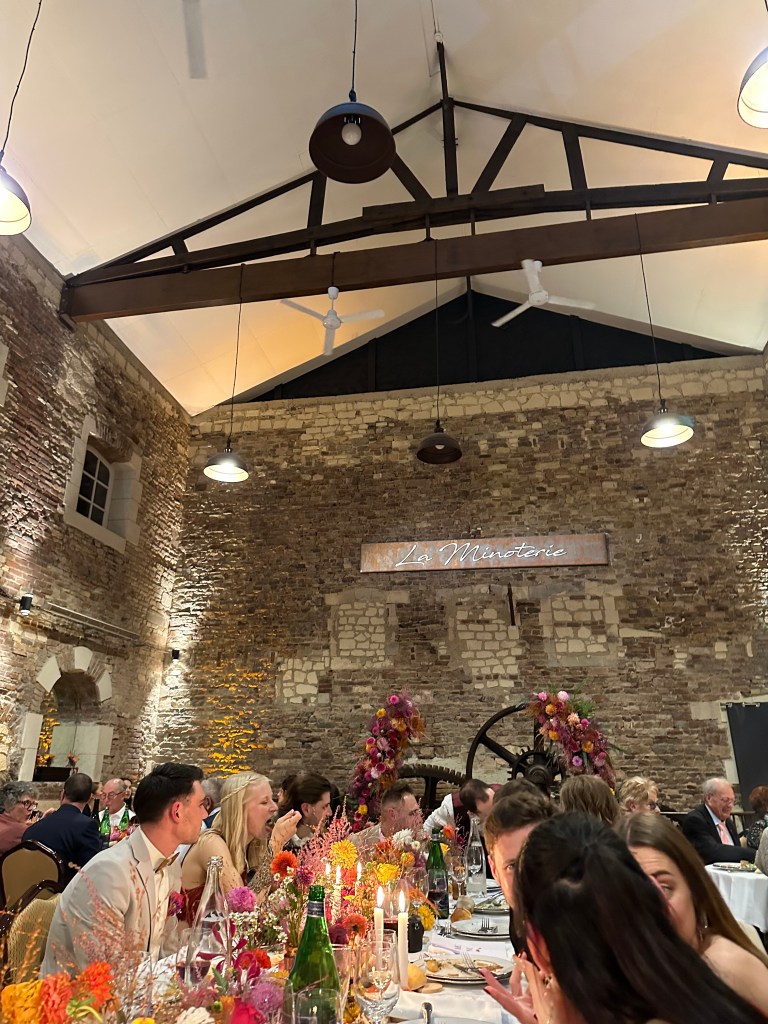
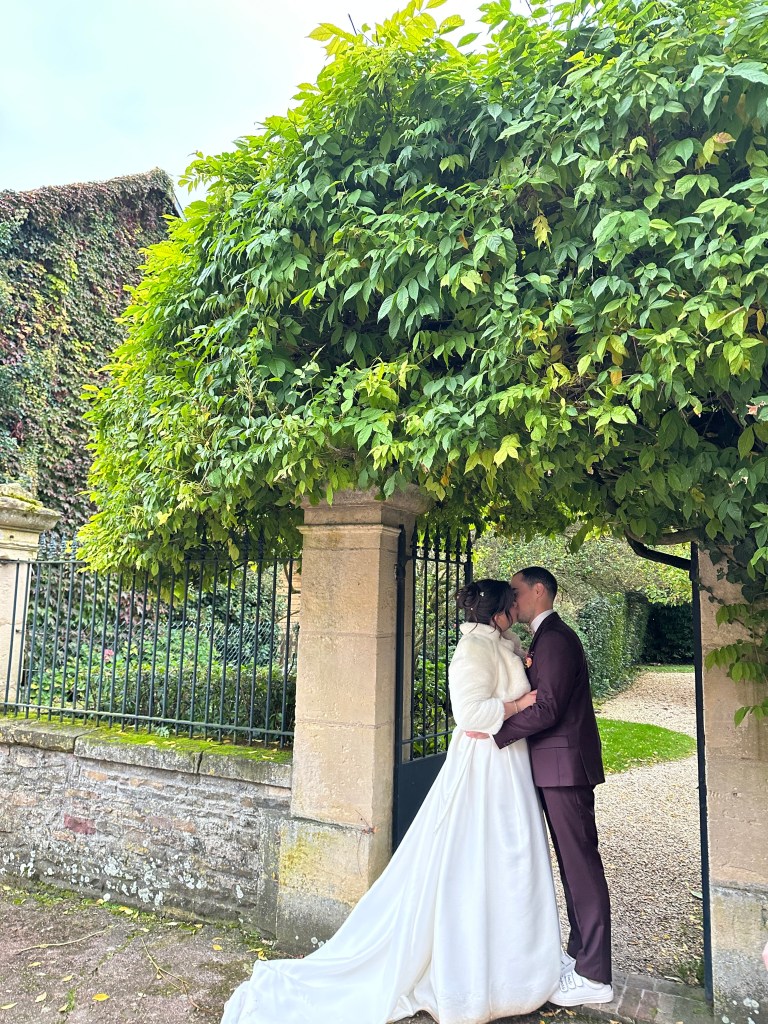
This was my first wedding, and therefore first French wedding, and wow- it was so fun. My day started at 6:30 am with the unlucky spot of first to have my hair done. By 7:30 am I was ready for the wedding, but the festivities didn’t really begin until 1 pm. Around 1:30 the girls who attended the Bachelorette went to Marie’s room for the dress reveal, and of course we all started crying. She was beautiful!

We had the church at 2-4 pm and then what they call vin d’honneur, ‘wine of honor’, which is a reception time between the church and the wedding dinner. Marie really had the best taste, as the food was mini desserts for the first few hours – my dream! Servers would approach with eclairs and cakes, and then as soon as you look the other direction another server was there to fill your other hand. And it was only 6 pm!

After that, we had a cocktail time, with drinks and salty foods. This lasted from 6:45-8:45 pm, when we eventually sat for dinner. Marie’s family are hospitality professionals, with a Michelin-starred restaurant, so you can only imagine how elevated the food selection was throughout the entire day. Dinner was no different. We had steak and potatoes, with their selected wine pairing and a dessert buffet to conclude the meal around midnight. The dancing began a little after midnight… shocking for my American mind.

It was so special seeing the opening of the ‘bal du mariage’ (dancing), where Marie and her now husband Clément danced to choreography I had done for them. They looked amazing!

Then we danced the night (or morning?) away. It was truly an unforgettable weekend celebrating love!

Congrats Marie & Clément!

So, what now? Life in Paris post-grad

Wow, those 2 years flew by! I officially received my attestation de diplôme a few weeks ago, meaning that I now have my Masters in Communications, Media and Creative Industries!


I really enjoyed the second year of my Masters at Sciences Po, particularly the part of it that included working at L’Oréal. I was in the Beauty Tech & Digital Communications team for the past year, in charge of messaging. I found it so rewarding writing and communicating about innovations that help people with limited mobility to apply makeup, or help salons be more sustainable, for example. We were touching on how technology can make the beauty industry more personalized, inclusive and responsible, and throughout the year I worked on both internal content (like newsletters and position papers) and external content (like the L’Oréal Press Kit for VivaTech, a major tech event in Paris) alongside tech & digital experts. I loved the role and my team, and found it an invaluable experience to conclude my studies.

Nothing can fully prepare you for the transition from student to employee. Only one month in, the weeks are flying by! How are we only supposed to have 2 days of free time? Although I can’t complain, because as of right now while awaiting my next visa, I am working part-time so I still have a few extra days each week 😉

I am now working at a nonprofit in the culinary industry! It is a completely different world and requires tailoring to the different needs of a global audience of hospitality professionals. Doing social media, content and PR, I am excited to grow and learn more in this industry.

I am looking forward to seeing what is to come as I begin my professional career. I love working in communications because you have a lot of room for creativity, and it also requires a lot of writing, one of my favorite activities! As for what comes next, as I transition to this new chapter of life I look forward to taking advantage of living and working in Europe, being able to travel, use the extensive vacation to spend time at home, and of course, continuing to explore Paris!

Stay tuned for more:)

Life as an Apprentice in France

Hello everyone!

Now that it’s year 2 of my Master’s degree in France, I have some insight into student opportunities that I’d like to share:)

One of the perks of student life in France is the ability to do what’s call an apprenticeship, or apprentissage in French. This means that you alternate courses with working in a company throughout the duration of the year. While it can be a strange feeling being half in school and half in work, there are numerous benefits, including that tuition is paid for by the company and you have a small salary on top of that. 

I can’t believe I am already going on my 7th week of work (and classes) of the school year. At Sciences Po (my university) we have 6 courses in the communications program to take as apprentices this semester. I organized my schedule so that all of my courses fall on Monday and Tuesday, while work is Wednesday to Friday. They call this your apprenticeship rhythm. Many schools follow a different rhythm, usually of a few weeks of work followed by one single week of classes, but it really just depends on your program and university.  

Beyond the aforementioned financial benefits for students in apprenticeships, the list of advantages continues. Benefits can be company-dependent, but can include paying for your transportation in Paris, offering restaurant tickets, providing days of absence for exam studying, and more. Additionally, you’re considered as an employee, which means you have the same vacation as full-time positions, which in France is at least 5 weeks per year. Pas mal 😉

The difference between an internship and an apprenticeship is that usually the apprentice will have more responsibility and is expected to need less guidance in tasks. Especially since apprentices work at the company for 12 months, they take on more and more responsibility as the year goes on. The goal of many apprenticeships is that the company will be able to mold the apprentice to their culture, ways of working, missions, etc. before potentially hiring the apprentice in a full-time position at the end of the year.

Beyond a student’s university and the company that hires them as an apprentice, there’s a 3rd player in the mix: Formasup. Formasup is a “centre de formation d’excellence,” essentially acting as the middle man between the enterprise and the school, and managing the apprenticeship contracts. While we don’t have much contact with Formasup apart from signing contracts, they do have assistance for students in terms of cheaper housing, finding driver’s license courses and more.

What is very evident living in France is that there are numerous opportunities for student aid in almost all aspects of daily living. From my understanding, it seems more affordable right now than the same lifestyle in the United States, due to these initiatives and general cost of living, despite the existence of inflation in France, too.

While apprenticeships are not easy to obtain, especially not as a native French person, I would highly recommend it for anyone. So far, classes have gone by quick and I absolutely love working in the company. I’ve been fortunate to have a welcoming team of French people where I work who have helped in the adjustment process and given me increasing responsibility these past weeks.

Until the end of the year, I will only be working 2.5 days a week, but as of January it becomes essentially full time, which is exciting. I am looking forward to the rhythm change (January to September 2024) to really be integrated 100% into projects and continue to learn and assist the team.

I hope you’ve learned a bit more about apprenticeships in France and let me know if you have any questions! 🙂

My First Summer in Europe

Hi everyone!

It’s been SUCH a long time since I’ve written a post for this blog – since before I moved to Paris one year ago! Time truly does fly. I do love having this blog to write when feeling inspired, and I’m really grateful to have people who may still be reading my posts all these years later:)

With school resuming Monday, I thought it would be the perfect time to recap the past few months, my first ever summer in Europe! 

Sure, I’d visited France during summer before, but being here for several months of the season was an entirely new experience and it was wonderful to have time with nothing to do to explore. 

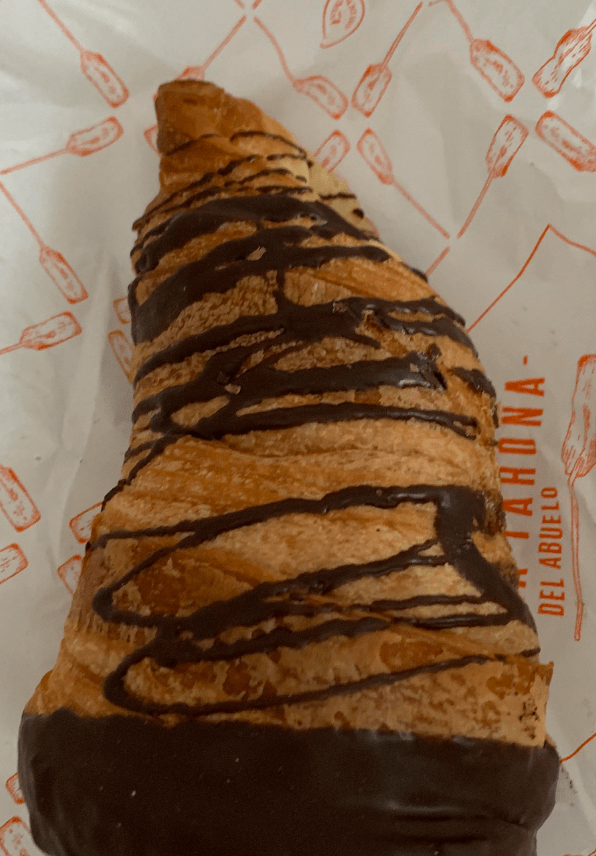
During the first month of summer (May) I was able to go to Valencia, Spain for a couple of weeks which was amazing. The weather was perfect and it was not touristy at all. If you ever visit Valencia, they have these amazing chocolate croissants that are filled with a melted chocolate😍. I ate wayyy too many while there!

the choco croissant 🙂

During this trip in Spain, I also traveled to Mallorca, a Spanish island in the Mediterranean. It was a quick trip staying primarily in Palma, and I think if I ever went back it would be cool to see other parts of the island, too. It’s very drivable, so you can take a rented car all over the island on day trips. 

The month of June I returned back to Paris for a busy few weeks. I got to see Harry Styles in concert, go to Roland Garros (the French tennis open), attend VivaTech (a conference highlighting innovations and startups) and visit my friend Marie in northern France. This was also a month of great weather and spending time with friends here in France.

At the end of June, I was able to head home to visit my family for a couple of weeks. The weather in the U.S. was pretty rainy while I was there, but I loved getting to see all of my family and relax at home. Plus, there’s nothing better than having home-cooked meals from mom:) I miss my family already! It’s certainly the hardest part about living abroad, thankfully we have FaceTime to help a bit.

Returning back to Paris on July 12th, I made it just in time for Bastille Day, the French national holiday on July 14th. On the 13th and 14th night in Paris, they have what’s called the “Bal des Pompiers.” This is basically a party that takes place at the fire station and run by the firefighters, literally translating to the ball of the firefighters. My friends and I went on July 13th and it was crazy. We waited in line for 3 hours before getting in around 1 a.m. and there were so many people. The balls take place in almost every arrondissement of Paris on either the 13th or 14th of July. On the 14th, the national holiday is celebrated with a huge fireworks display at the Eiffel Tower. I spent this night in the 18th arrondissement, but it was hard to see the fireworks, considering the Eiffel Tower is so far away from this area. 

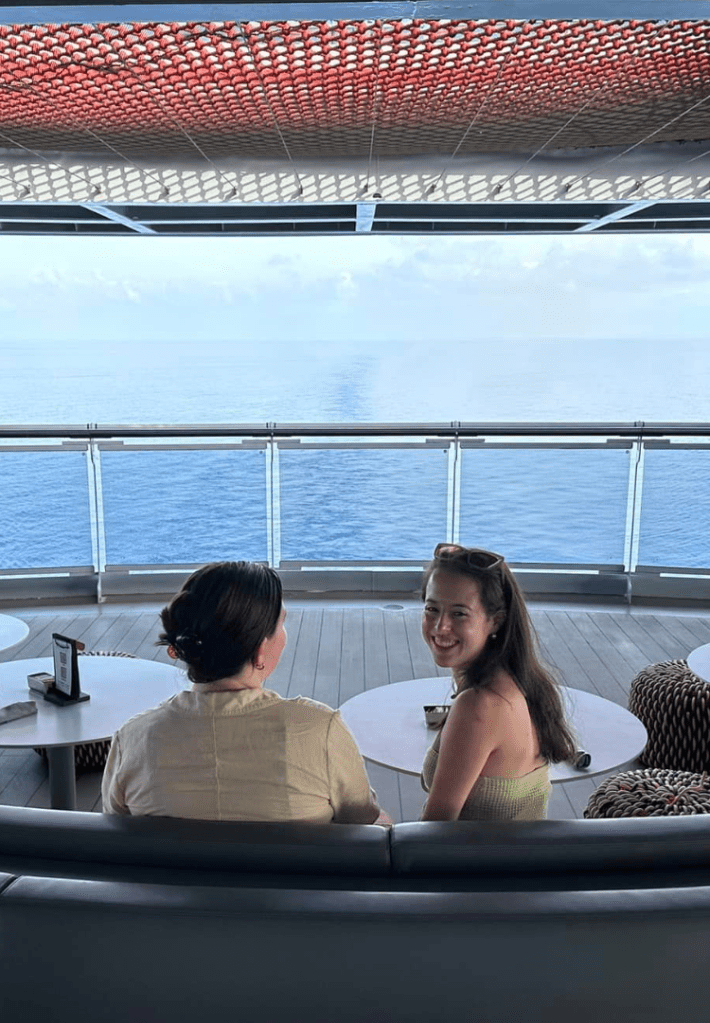
Also in July, I had the opportunity to go on a cruise with one of my best friends from school here in Paris, Paige. The cruise began in Barcelona and went to France, Italy, Corsica and Ibiza. Out of these places, Corsica was definitely my favorite; it is absolutely beautiful there! 

Overall, I had forgotten just how much fun cruises are, with endless games, events, performances, food and more, all while visiting so many new places. Paige and I were definitely some of the youngest people on the boat, but honestly it made it all the more fun! I would definitely recommend this vacation to anyone; I truly had the best time. 

Coming back to Paris at the end of July, most of my plans and travels were over. With plenty of time this past month, I’ve found new activities and hobbies that I really enjoy. The first is cooking. It’s been so fun trying new recipes that are more complex than the pasta and frozen vegetables that was my school year staple. My roommate and I started a cookbook that we’ve been adding to which has been a nice activity. I hope it continues during the school year! 

The second activity I’ve been up to this month is exploring each arrondissement of Paris. As you may know, Paris is divided into 20 arrondissements (sections). In August, I decided to visit each arrondissement corresponding to the day of the month (so on the 1st I went to the 1st, 2nd to the 2nd, etc.). This was super fun and definitely helped with my geographical orientation of the city. 

Now, after months of free time and relaxing, it is time to begin my second year as a Masters student. This year I will be doing an alternance, meaning studying and working part-time. The first semester should be busy, with 6 classes and 3 days at work, but I am hoping to find new topics and the time to write about them on here, too. 

I hope you all had good summers as well, and I’d love to hear if there is anything that you’d be interested to read from me about life here in Paris, traveling or the French culture! 

À bientôt, 

Julia 

Getting a French Visa in 2022

Bonjour à tous et à toutes!

Today I had my appointment at the VFS Center in New York City as the final step in the process of obtaining my long-stay student visa for France. This process is no easy feat, so I’ve decided to lay out the steps below. However, visa information may change regularly, so it’s important to consult the official France Visas website for the most up-to-date information.

1. Utilize the Campus France website.

Campus France is the French agency responsible for helping international students in France by promoting education and student services. Their website is very helpful in providing everything to know about the visa process and life as a student in France. Campus France will direct you to create an account on Études en France (the higher education process) for starting the visa process.

2. Create an Etudes en France account and begin the first application.

When you create the account, use a personal email that you will have access to at all times. Tip: Keep the email consistent between Campus France, Etudes en France and the final French Visas sites for consistency. Once logged into Etudes en France, select “Students already accepted” (if you’ve already been accepted to a French university) and begin the process under “Finalize the procedure”. This application requires information about your school and program as well as uploaded documents in correct size and file format. To convert my files, I used a lot of screenshots and this JPG compressor to compress the size.

After you’ve uploaded your passport, headshot, resumé, acceptance letter and transcript/diploma, you are ready to submit. They have two options for submitting: 1) $25o for 3-week processing time or 2) $390 for a 3-day processing time.

Once it is processed (if there is nothing missing) you will receive an email from Campus France confirming it’s been processed. Additionally, an attestation called “Accord préalable d’inscription” or “Pre-enrollment Certificate” will be posted in your account. BOTH of these things must be printed and brought to the final visa appointment.

3. Create an account on France Visas to begin the second step

The next step is completing the application on the France Visas website. This application is relatively quick and does not require any uploading. At the end of the application, the website directs you to make an appointment at one of the 9 France VFS Centers in the U.S. Tip: It is important that the city you select in the application is the SAME as the city of your appointment. If there are no available appointments in the city you selected in the application, you MUST redo the application before your appointment.

Note: Summer is the peak season for visa appointments, so plan accordingly (although you cannot start the process more than 90 days before your departure!)

Once the appointment has been booked and the application completed, you are almost there!

4. Gather all documents for the appointment

Below is the list of documents that I brought to the appointment. Some items were not needed, but I always say it’s better to be safe than sorry. They also say to bring two copies of everything, but only one was taken.

  • The France Visas completed application (dated and signed)
  • France Visas appointment letter (received in an email after booking)
  • Passport
  • Passport photocopies (including pages of previous visas)
  • License
  • License photocopy
  • Passport-sized photo (unless, like I did, you pay for the service where they take it at the appointment)
  • Last completed degree (for this, I brought a validation letter from my undergrad university confirming I will be receiving a diploma as well as my final official transcript)
  • Etudes en France Certificate “Accord préalable d’inscription”
  • Campus France confirmation email
  • Last 3 bank statements OR financial guarantor form and the guarantor’s last three bank statements and proof of ID (must prove that after tuition you have at least 615 euros/month of stay)
  • Proof of accommodation OR explanatory letter of how accommodation is planned AND hotel reservation and (optional) letter from university explaining accommodation assistance
  • Acceptance Letter from university
  • Letter of Enrollment from university

Other items I brought but weren’t mandatory:

  • Flight receipt
  • High school diploma
  • CVEC student tax proof
  • Proof of tuition payment
  • Statement of motivation
  • Resumé
  • Confirmation of Campus France payment

5. Go to the appointment and wait for your passport

At the appointment, all papers will be collected and you will be asked to sign a few things. Finally, the address will be confirmed where your passport will be shipped back to. Someone MUST be home to sign for the passport upon its arrival. After the paperwork is done, someone will collect your fingerprint data and take your photo if you paid for that service.

Timeline: As of my appointment today, it is about a 2-3 week processing time give or take.

6. And you’re off! Bon voyage:)

I hope this was helpful or informative. It’s definitely been a big task gathering everything and preparing for this big day but overall it went very well and I hope to get my visa soon! À bientôt;)

French Presidential Election 2022: Recap

Despite not having posted on this blog in many months due to a busy final semester of college, I am back today to talk about a subject I’ve found recent interest in: French politics. 

You may have heard about the April 2022 French presidential election, or Présidentielle. In case you didn’t, (*spoiler*) Emmanuel Macron was just re-elected for his second five-year term as President of France. 

The French presidential election is a bit different from the way we do it in the United States. I’ve learned a lot of information in reading Le Monde and watching YouTube videos from people such as Bla Bla Kaity and Hugo Décrypte, especially as to how the French process works. First, to run, a candidate must collect over 500 signatures from elected officials before a certain date. In French, this is called le parrainage and it acts as the first filter of candidates. This year, 12 people made this requirement to enter the first round (or premier tour) of the election. Below are the 12 candidates and the parties they each represented (on a scale from extreme left to right):

Extrême Gauche (Extreme Left)

Nouveau Parti Anticapitaliste: Poutou

Lutte Ouvrière: Arthaud

Parti communiste Français: Roussel

La France insoumise: Mélenchon

Parti socialiste: Hidalgo

Europe Ecologie les verts: Jadot

Centre (Center)

La République en marche: Macron

Résistons: Lassalle 

Les Républicains: Pécresse

Rassemblement Național: Le Pen

Debout la France: Dupont-Aignan

Reconquête: Zemmour

Extrême Droite (Extreme Right)

During the first round, if one candidate earns more than 50% of the votes, they become President. However, with so many candidates, usually this is not the case. Instead, the two candidates with the highest percentage of votes go to the second round (or second tour in French). Unlike in the United States, French citizens get to vote directly towards who becomes President, without the filter of the electoral college. 

While this sounds like a great system, in one of my French classes this semester, we talked about how France is not a true democracy. I’ll explain why.  

In France (and la Martinique, la Guadeloupe, la Guyane, la Réunion, Mayotte, French Polynesia who also vote), there is still the option to abstain (l’abstention) where you would not vote at all. There are also les votes nuls where you can tear your ballot or make a note. Finally, there are les votes blancs where you can submit a blank ballot (bulletin) or an empty envelope. While the idea of this seems intelligent, these votes nuls and votes blancs are not counted. Even if the majority was not for either candidate, regardless, the person with the highest percentage would be elected. 

This year, the second tour was between Marine Le Pen (far right) and Macron (center but leaning right). Many people, especially the younger generation, were voting for Macron solely to avoid the extreme right. There were many students who wanted a candidate from the left who lost by a small percentage in the first round: Jean-Luc Mélenchon. Mélenchon had advocated for ecological action, something that neither Macron nor Le Pen were heavily focused on. There is an increasing number of ecologists in France, which could be an entirely separate post of its own.

While that does not cover absolutely everything, I hope to have shared the biggest things to know about the recent French presidential election. Everyone may not be happy, but at least in my opinion this was a MUCH better outcome than if it had gone to Le Pen. I am very curious to see what happens in the next five years!

Links:

Design a site like this with WordPress.com
Get started