Where to Start: Learning a Language 

Maybe recently you’ve decided to try learning a new language (if not, check out my last post!) , but you just don’t know where to start. 

We can all admit, the task does seem daunting at first. Because of that, I’ve decided to compile some ideas for language learning at the beginner, intermediate and advanced level. Hope this helps!

Beginner: 

  1. Duolingo

Duolingo is one of the most popular apps for learning languages. It advances you through a series of levels, using images and context clues. Plus, every word can be translated, so the examples are very helpful in learning new vocabulary. Of course, being an application it has its flaws, and it is definitely not as individualized in the learning process as a class would be, but it does the job for simple daily practice. The app also creates a streak when you practice for consecutive days, which makes you more motivated to practice and keep the streak. After over 10 years of learning French, I still use this app every night!

  1. Making flashcards

When learning the basics of French, I find it very useful to use flashcards. The flashcards can be handwritten or on Quizlet. It might even be helpful to Google “100 most frequently used words in [language]” and make flashcards of these everyday words. Otherwise, flashcards are useful to memorize conjugations and verbs, too. 

  1. YouTube videos

This strategy is one I would use for beginner, intermediate and advanced language learning. Because of the infinite amount of videos on YouTube, there is content for every level with numerous options on each topic. You may not know exactly what to begin searching for, but you can search for things like “learning subjects/pronouns in [language]” or “[language] for beginners” and so on. Comme une Française is a great YouTube channel for beginners in French. 

  1. Taking a class

If these beginner methods don’t sound that practical for you, there is always the option of taking an introductory class to start the process. Some people work better with a teacher where they can ask questions or get personalized corrections and explanations. There are classes online and in-person for most languages, so this is certainly an option if you’d like more guidance. There are also classes that are like workbooks, where you can go at your own pace. Specifically for French, this might be biased but I’d recommend Damon Dominique’s course. Yet, most, if not all courses will cost money, so consider what you’d like to invest in the language.  

Intermediate:

  1. YouTube videos

As I said in the beginner section, this one applies to all three levels. As you progress, the videos you can search for, watch and understand become more expansive and challenging. Street French, Bla Bla Kaity and French morning with Elisa are great channels for learning French that are at the intermediate level. 

  1. Study group

If you are in school or know people who are also interested in/studying French (or another language), try forming a study group! This way, you can practice and converse together. I’ve always enjoyed being able to practice with my peers, as it’s definitely a good place to start before talking to a native speaker. 

  1. Songs

Listening to music in a different language is, in my opinion, one of the best ways to learn. It teaches you new vocab and allows you to hear the pronunciation of the words, too. During quarantine in 2020, I really began listening to French music, writing down lyrics and making lists of words I didn’t know. I credit this method for raising my level in French above to a higher intermediate, especially back in early 2020. 

  1. Exposure 

This strategy was suggested by my sister, so thanks Lauren. She said that if you are able to, exposing yourself to native speakers would be very beneficial in this stage. In an ideal world, we could all travel to new countries and be surrounded by the language. But, when this is not the case, you could try reading the news of a different country, listening to podcasts and spending more hours of the day exposed to the language you’re learning. Le Monde is the news app that I enjoy reading in French.

Advanced:

  1. YouTube videos

For the advanced level, watching native speakers on YouTube is a way to continue learning. In French, I’d recommend innerFrench, Piece of French and Ben Névert. Listening to natural, fluent conversation is great practice and works on comprehension of faster speeds. Fortunately on YouTube, videos can be slowed down and there are often closed captions if needed. 

  1. TV shows and movies

Similarly to YouTube, watching TV shows and movies in the language you are learning is another excellent step for the advanced level. In French, I’d currently recommend Dix Pour Cent, L’Agence and Les Intouchables. A great feature on many streaming platforms is that you can change the language of many shows and films. If you’ve watched a specific thing several times and know the plot, try changing the language and see if you can follow along.  

  1. Reading

This is probably one of the hardest things to do as a language learner. Reading can be complicated and is often more formally-written than conversational vocabulary. It probably requires one of the highest fluency levels of these strategies, but teaches words that may not be heard on YouTube or in shows. Personally, reading in French is something I’d like to work on this year. 

  1. Conversation

Once you feel comfortable enough, having conversations with native speakers is another great way to learn. In the past I’ve used the app HelloTalk to talk to French speakers, but there are definitely some weird people on this app and it has evolved in a way that I don’t love. Instead, I’ve heard Tandem is another option to meet native speakers, or you could try meetup.com or conversationexchange.com, too. But again, filter through the people you meet on these apps. Once you have, it is so fun to practice! 

Let me know if you have any other tips for learning a language, or if any of these strategies have worked for you!

5 Reasons to Learn a Language in 2022

If you’re looking for a new activity to do as the year begins, why not try language learning! Understanding a second language is so beneficial and it’s never too late to start. Here are five reasons you should try to pick up a new language this year:

  1. It fills free time.

Think about how much time you may find yourself bored, searching through TV channels, not knowing what to do. Instead of wasting that time scrolling endlessly on Instagram and Facebook, you could put it towards learning a new language. 2022 is only getting started and this would be a great “resolution” to focus on something new! 

  1. It makes you stand out. 

As employers sift through dozens or thousands of applications, knowing and understanding a second language is a great way to stand out. It becomes a talking point in interviews, as the employer may want to know more about this asset. Additionally, knowing a second language has the potential to open up your job search, as there are positions where multiple languages are crucial. It is not only a great addition for a resumé, but it adds value to you as an employee. Language learning is a skill; it has the ability to enhance character or give texture to your identity (If this sounds too philosophical/existential, it’s because I just read A New Earth by Eckhart Tolle…) Truly, mastering, or attempting to master a second language is a valued skill. 

  1. It lets you see the world differently.

Now, you may take this or leave it, but many people say that learning multiple languages makes you see the world differently. To me, this is a matter of vocabulary. Certain words exist, for example, in French, that do not exist in English (and vice versa). Knowing these words, and I’ve seen this happen for many language-learners, you want to describe something but must resort to the word in the other language, as there is no exact translation in your own. Maybe knowing a second vocabulary allows you to see, experience or describe the world differently. Again, take it or leave it. 

  1. It eases travel.

Have you ever been nervous as to what traveling to another country is like not knowing the primary language? Traveling will eventually return to its pre-pandemic popularity. When it does, imagine the comfort in knowing another language in your travels. It can make life so much easier, from navigating the airport to buying food and much more. Even if you haven’t mastered the language, it can be a courtesy to know a few basic words so that English speakers don’t expect the rest of the world to accommodate. 

  1. It gives you the ability to meet new people.

Probably my favorite reason, language learning lets you meet new people and understand each other. It allows you to have a conversation beyond basic greetings. It lets you learn about a new culture, understand other lifestyles and communicate with people that you might otherwise have never been able to talk to. Being able to talk to someone else when you grew up with different maternal languages is such a cool thing. I am so grateful for the people I’ve met through learning and knowing a second language.

Are you convinced yet? 

If not, I’ve linked a bunch of websites below that include even MORE reasons to learn a language. 

If you are convinced, stay tuned for my next post about ways to get started. Good luck! 🙂 

https://www.onlinecollege.org/2010/07/26/50-reasons-you-should-learn-a-new-language/

https://www.middlebury.edu/language-schools/blog/why-you-should-learn-second-language-and-gain-new-skills

https://www.sciencedaily.com/releases/2011/03/110314132531.htm

https://theconversation.com/7-reasons-to-learn-a-foreign-language-112369

https://cla.auburn.edu/world-languages/future-students/25-reasons-to-study-foreign-languages/

Is the 2022 French Presidential Election Contributing to Covid Protocols?

Happy New Year! 

While Covid loomed over 2021, the beginning of 2022 seems to be looking quite similar. Cases are rising globally, and in France cases have increased drastically by day. Yet, Emmanuel Macron, President of France since 2017, is not enforcing a countrywide lockdown this time around.

France is not foreign to lockdowns. In fact, it was the country’s usual course of action to mitigate the virus from spreading and for some time, seemed successful. However, other measures are now being taken instead, including longer isolation requirements and more testing.

Some people are speculating the government’s new course of action as being related to one of the country’s big 2022 events: the Presidential election.  

France has a Presidential election every five years. The election has two rounds. In the first round, anyone can be nominated after getting 500 signatures from national or local-elected officials. If a single candidate wins more than 50% of the votes in the first round, the second round is omitted, but this has not happened since the current system was established in the 60s. 

The second round follows with the top two candidates. Whoever receives over 50% of the votes in this round is the new President, and would then elect the new Prime Minister. This year’s Presidential election in France will take place on April 10, with the second round following on April 24, 2022. 

Due to a notable dislike to the way Macron has handled the pandemic, citizens are wondering if this has contributed to his minimal discussion of lockdown. After all, Macron aims to win the 2022 election in his one attempt to re-run (French presidents can only be re-elected once). Maybe Macron is trying to become favorable by letting people have more freedom? Additionally, over 70% of the country is fully vaccinated, which adds a certain amount of comfort as compared to the past times where cases have risen. 

In a few months, we will see if this choice and the new safety protocols lead to a good result for both Macron himself and the country. 

Let me know your thoughts on whether Macron/the government’s actions are related to the election, or if you think there are other reasons!

Bora Bora and French Overseas Territories

If you do not keep up with France itself, maybe you’ve heard of some of the French territories. 

For example, in the past month, you may have heard about New Caledonia’s recent vote on independence. New Caledonia is located east of Australia and is a French overseas territory. While the President of New Caledonia is pro-independence, the entire territory is not. Half of the residents seem to be pro-independence, while the other half wants to remain part of France. This is shocking, however, because in the early December referendum, 97% of votes were against independence. Yet, many people argue that this referendum was not accurate, as there was only a 43% voter turnout prompted by a boycott from the Kanak population. Residents wanted the vote postponed due to a major Covid outbreak. Despite this, French President Emmanuel Macron still celebrated the result, saying “Tonight France is more beautiful because New Caledonia has decided to stay part of it” (France 24). Check out this New York Times article on the referendum for more information. 

Don’t know New Caledonia? Well, perhaps you’ve heard of another French territory: Bora Bora. Not as politically charged, Bora Bora is a part of the Society islands of French Polynesia. French Polynesia is broken up into 5 archipelagoes (groups of islands): the Society Islands, Tuamotu, Gambier Islands, Marquesas Islands and Tubuai Islands. The capital of French Polynesia, Papeete, is located on Tahiti, one of the Society Islands. 

To break it down even further, the Society Islands are classified into two groups, the Îles du Vent (Windward islands) and the Îles Sous le Vent (Leeward islands). As for the ones you may know, the Îles du Vent includes Tahiti and Moorea (shoutout to my good friend Moorea Walker named after this island), while the Îles Sous le Vent includes Bora Bora and Raiatea. 

Bora Bora is one of the most popular tourist destinations, known for its luxurious, white beaches and overwater bungalows. It was formed more than 7 million years ago by a volcano, and now is surrounded by a coral reef, also known as an atoll. According to JetSet Christina, a trip to Bora Bora can cost anywhere between $13,000-$40,000 for two people. 

Photo Courtesy of Robert Edward Bradley on Unsplash.com

I first learned about Bora Bora in 2015 watching one of my favorite YouTubers Aspyn Ovard. She traveled there twice with her now-husband doing travel videos and working with Tarte, a beauty company that sponsored one of her trips. Below is one of her videos made while there.

BORA BORA OVERWATER BUNGALOW TOUR!

The island is the perfect travel destination for everyone, having activities on land and water, as well as the perfect spots for relaxation. It takes about 9-15 hours to get there from the U.S., and closer to 24 hours from Europe (so major jet lag!!) This means it is well worth the stay to get over the time difference:)

Bora Bora covers 12 square miles and has a population of a little over 10,000. The primary languages are French and Tahitian, but English is also spoken due to major tourism. Tourism is Bora Bora’s primary source for the economy, thus contributing to the French economy overall. The high season is between June-August, so prices and crowds are highest then.

Even with insane costs and significant travel time, Bora Bora is definitely one of my dream travel destinations. The views, beaches and idealizations of the island make it seem so exciting. Plus, it’s French, so tant mieux! 😉

What’s your dream travel destination?

Christmas in France vs. America

Joyeux réveillon de Noël! (Merry Christmas Eve! Also called La veille de Noël in France.) With Christmas being tomorrow, I decided to do some research on the differences between the holiday in France and America. Watching several YouTube videos from expatriates including Diane (Oui in France), Rosie McCarthy (Not Even French), Kate (Unintentionally Frenchified), and Jordan Patrick, I’ve compiled the list below of some of the biggest differences: 

  1. Christmas Markets

One thing that was mentioned in every video that I watched was that France has some of the best Christmas markets. Strasbourg, a city on the east of France right next to Germany, was mentioned as having really festive Christmas markets. Apparently these markets attract a lot of people and personally it’s not something I’ve seen or done in the U.S.

  1. Christmas Cards

Practically as soon as it hits December as an American, you start receiving and/or sending Christmas cards in the mail. Cards arrive from friends and loved ones in time to hang around your house or on your refrigerator for the holiday season. In France, this is a bit different. Rather than Christmas cards, people more often send New Year cards. In stores, supposedly there are many more cards saying “Bonne année” (Happy New Year) rather than celebrating the actual holiday of Christmas. 

  1. Sales

As an American, I can attest to the fact that we love the holiday sales. November and December are the time to purchase everything because of the seasonal offers; well, at least the promotion of these offers convinces us that it’s the best price. In France, there are two times a year where the country has big sales, “les soldes,” as mandated by the government. These two sales happen around January and July. Therefore, most gifts at Christmas time do not come at major discounts as they do in the U.S. Although, as time passes, France is starting to pick up on Americanized traditions such as Black Friday deals (even though they do not celebrate Thanksgiving), so the world of sales may be changing there. 

  1. Food

From what I learned doing research for this post, it seems that many people in France celebrate with a big meal on Christmas Eve rather than on Christmas day. The meal on Christmas Eve is called Le Réveillon, coming from the verb réveiller which means to wake up. Typically, this meal can continue for hours and go into the night, and on Christmas day the meal may be smaller. As for the food itself, a French meal may include seafood, foie gras and turkey, and dessert is usually a bûche de Noël (yule log cake). This differs from American holiday meals which are often turkey, potatoes, cranberries, gravy and bread.  

  1. Stockings

One thing that I’ve learned (and that I don’t really love) is that there are no stockings in France. Personally, I love waking up on Christmas morning and opening the stocking. Apparently, in France children will leave a pair of shoes by the tree/fireplace in hopes of finding small goodies in the morning in their shoes, almost like a stocking. Also, instead of giving Santa milk and cookies as we do in the U.S, French children may put carrots in their shoes for the deer. For most American families, gift-opening happens in the morning or during the day (in my family it was always as soon as everyone was awake). The videos I watched said that many French families wait until after dinner to open gifts.

  1. Le Père Fouettard

Last but not least is le Père Fouettard, probably the most shocking tradition that I heard. Santa in France is named le Père Noël, meaning Father Christmas. However, he doesn’t come alone. Alongside him, le Père Fouettard, translating the whipping father, is the darker figure who comes to give coal, or even whip the bad children. This is definitely shocking and I wonder if it is becoming more outdated as the world becomes more sensitive. 

As for other religions, I read that while there is a large Jewish population in France, you won’t find many decorations or menorahs in stores. I don’t have too much detail on that, but I did see that Hanukkah is not as popular there. 

I hope you found this as interesting as I did! Merry Christmas 🙂 

Nonante-Cinq: Angèle’s New Music

As the new year approaches many artists are announcing tour dates, a result of over a year of making music that is now ready to be seen around the world. Angèle, a singer from Belgium who is certainly not new to this blog, has also announced her tour, “Nonante-Cinq” (“95”) after recently releasing her new album with the same title. 

The album was originally set to come out on December 10th, a week after Angèle’s birthday. However, the week of December 3rd Angèle tested positive for Covid, and in isolation decided to push for an early release. With no Covid symptoms, Angèle held a birthday Instagram livestream on December 2nd. The livestream featured guests including singer Pomme and one of Angèle’s team members. She sang some of the new songs live, before ending the virtual celebration with the early-release announcement. 

In my opinion, Angèle is like France’s equivalent of Ariana Grande. While she may not be known by Americans (because most Americans don’t listen to international music), she is very popular in France. Surprisingly, she only has one other album “Brol” (released in 2018) and a larger version of this album called “Brol La Suite” (released in 2019). Her music is very catchy and her lyrics are well-thought out.

The new album is no different. Named “Nonante-Cinq” after her birth year, it includes much more personal songs than “Brol.” Perhaps due to the all-around challenging year, “Nonante-Cinq” touches more sensitive subjects, reflecting on various struggles that she faced or faces. 

The album begins on a lighter note with a song entitled Bruxelles je t’aime meaning Brussels I love you, as an anthem to her home country. The second song, Libre, is about being free from someone and celebrating freedom. On s’habitue, Solo, and Pensées Positives follow, continuing with personal sentiments. While all of the 12 songs on the album are good, my favorites include Libre, Taxi, and Plus de sens. The album is available on all music streaming platforms. 

If you are interested in knowing more about Angèle’s life and rise to fame, she recently released a Netflix documentary on November 26 (available to watch in French and English!) Let me know what you think of the album or documentary:)

#MeToo en France

Il y a 15 années le mouvement #MeToo a commencé aux États-Unis par Tarana Burke. Ce mouvement a conduit beaucoup des femmes à travers le monde à libérer la parole contre l’abus et l’assaut sexuel, pour déplacer le harcèlement pour les femmes qui étaient et qui sont victimes. Le hashtag “Me Too” s’est répandu sur les réseaux sociaux et les femmes unifiées. Dans les pays différents, #MeToo a changé, et en France, c’est devenu #BalanceTonPorc. Le mouvement en France était aimé par les figures publiques comme Brigitte Macron, mais en fait c’était plus controversé avec beaucoup de critiques. 

Fifteen years ago the #MeToo movement began in the United States by Tarana Burke. This movement led to a lot of women around the world speaking out against sexual abuse and assault, to create change for women who were and are victims of harassment. The hashtag #MeToo spread on social media and united women. In different countries, #MeToo changed slightly, and in France it became #BalanceTonPorc. The movement in France was supported by public figures including Brigitte Macron (Emmanuel Macron’s wife), but it was actually more controversial in France with a lot of criticism.

Peut-être #BalanceTonPorc vous dit quelque chose si vous connaissez la chanson d’Angèle “Balance Ton Quoi.” Cette chanson, sa deuxième plus célèbre après sa chanson “Fever” avec Dua Lipa, est une reprise de #BalanceTonPorc et c’était l’hymne du mouvement. YouTuber Elsa de la chaîne Piece of French a bien expliqué et analysé la chanson dans la vidéo que j’ai lié au dessous. 

Maybe #BalanceTonPorc reminds you of something if you know the song “Balance Ton Quoi” by Angèle. This song, her second most famous after her song “Fever” with Dua Lipa, is a reprise of #BalanceTonPorc and became the hymn of the movement in 2018. YouTuber Elsa from the channel Piece of French explained and analyzed the song in the video that I’ve linked below.

Alors que cette chanson est sortie en 2018, le mouvement est toujours en vigueur aujourd’hui. Lundi, une lettre était publiée dans le journal Le Monde en France de 285 femmes avec de la puissance en politique et dans le monde universitaire. Dans la lettre, on a demandé de retirer certains hommes de la politique qui ont été impliqués dans des allégations d’assaut sexuelles. Les femmes ont dit qu’en 2021 elles peuvent parler et libérer les paroles, mais elles exigent enfin d’être entendues. 

While this song came out in 2018, the movement is still in effect today. Monday, a letter was published in the newspaper Le Monde in France from 285 women with power in politics and academia. In the letter, they asked to remove certain men from politics who are implicated in sexual assault allegations. The women said that they recognize their ability to talk and speak freely, but they ask to be heard.

Selon la lettre, trois candidats potentiels pour l’Elysée de l’année prochaine ont été déjà accusés de harcèlement contre des femmes. Le but de cette lettre est d’avoir un environnement politique plus sûr pour tous et toutes. Depuis lundi, le hashtag #MeToo a refait surface et a pris de l’ampleur pour la participation dans les marches qui auront lieu ce samedi par le #NousToutes collectif. 

According to the letter, three potential candidates for next year have been accused already of harassment against women. The goal of this letter is to have a political environment that is more safe for everyone. Since Monday, the hashtag #MeToo resurfaced and created motion for participation in marches that will take place Saturday November 20 coordinated by the #NousToutes collective.

En avril 2022, la France aura un élection présidentielle et les femmes de France ont l’espoir pour plus de justice et la continuation de ce mouvement dans le futur. 

In April 2022, France will have its next presidential election and women from France are hoping for justice and the continuation of this movement in the future.

Plus d’information sur ce sujet: https://www.france24.com/en/france/20211116-women-on-the-french-left-launch-metoopolitics

Celle Que Vous Croyez: Film Review

This semester in my French literature class we’ve spent a portion of the semester studying French playwright Marivaux’s “Le jeu de l’amour et du hasard.” This is a play about a girl who does not want to marry the man her father has chosen for her. The daughter, Silvia, disguises herself as her servant. However, her prospective husband, Dorante, has the same idea and disguises himself as his valet, too. This play is a comedy, ending with happy relationships and social order restoration as per this time period of comedic plays. 

My professor decided to show us the 2019 film, Celle Que Vous Croyez (Who You Think I am), as a modern adaptation of the same ideas that Marivaux had proposed in the play. The film, starring Juliettte Binoche, is about a mother who decides to create a fake social media profile and falls in love with a young man. Throughout the film I did not originally see how the plot connected back to Marivaux’s work. Yet, while not spoiling too much, in the end the viewer can see ideas of social restoration, love and even commentary on feminism. Although the story was slightly uncomfortable, overall this movie was extremely well done and it kept you on the edge of your seat. I’d highly recommend it.

In class following the film, my professor not only continued the discussion of connections between Marivaux and this movie, but we also analyzed the work of the author, as the film was an adaptation of the book. The author, Camille Laurens, reveals a lot even before actually reading the text or watching the entire thing. The main character is named Claire Millaud. Her last name has a close connection to the author’s name. Mill-Lau… (reflected in Camille Laurens). Further, the name Claire and her Internet pseudonym Clara are similar to the word “clair” in French, meaning clear in English. We discussed in class how the idea of clarity is extremely incorporated in the plot, so it was interesting to recognize that connection afterwards, as well. My professor, Sabine Loucif, is currently writing a full analysis of the film and Marivaux’s work, so I am looking forward to that. 


Generally, the movie can be analyzed much beyond surface-level watching. I really enjoyed both Marivaux’s play and the film. If interested in French literature or movies I would again suggest both of these two. The film can be rented on Amazon for $4! If you watch, let me know what you think:)

Travel Series: Paris, France

During the month of August, I was in Paris three separate times, but I’ve decided to combine all three brief visits into this one post.

The first time I arrived in Paris, on August 12, I walked to the Jardin des Tuileries for the Fête Foraine. This is a summer festival set up in the garden with rides, food and games. I had so much fun walking around and going on the swings to have a great view of the city. 

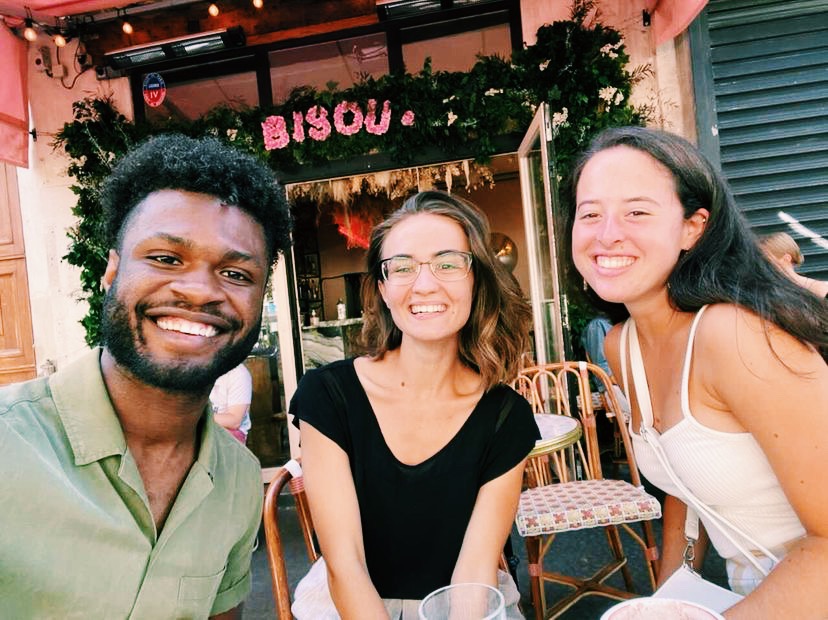
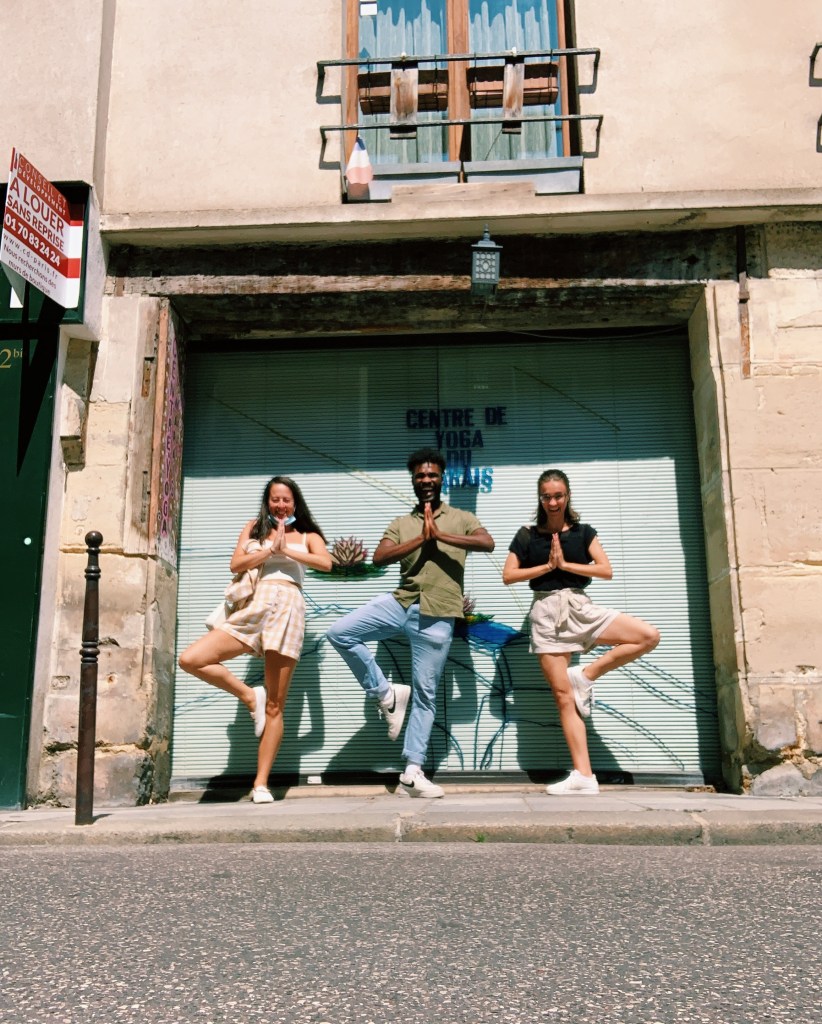
On my second day in Paris, I saw two friends from my study abroad experience. I hadn’t seen them since leaving France to go back to the U.S. in March 2020. One of them now lives in France, taking dance and French classes. The other was on vacation like me. The three of us got lunch at one of our favorite Chinese restaurants and then went to Bisou, a bar that I had seen influencers posting about. We also walked by the yoga studio that we took our yoga classes at to reminisce. After that, we decided to try to go to several pharmacies to get the French vaccination pass (read my passe sanitaire blog here), unfortunately with no success. It was so nice to see familiar faces and it’s great to have friends internationally to reconnect with. 

The second time returning to Paris after traveling to Lyon, Cassis and Marseille, I was able to see another friend from study abroad, Nathaly. I know Nathaly from the French courses we had to enroll in during my semester abroad. Nathaly and my common language is French, so during dinner we spoke French the entire time. Even though our lives are completely different, it’s crazy to be able to connect with someone who is simultaneously learning French with you (even though now that she lives with her French husband she is much better than me!) I was so glad to have made such a good friend in the language classes while abroad. 

The next day after seeing Nathaly, I visited Montmartre. It was nice to have no plans and be able to go wherever I wanted to; I was able to go to the Parc des Buttes-Chaumont, too, which I had been wanting to do for a while. 

View from Montmartre

The next morning before heading to Caen, I had one of the best experiences taking a commercial dance class from Loriane Cateloy Rose, one of my favorite young French dancers. She is so talented and I was starstruck having a private dance lesson from her for two hours. I’ve taken her Zoom classes at 5 a.m. in the past and learned her choreography from YouTube, so it was absolutely crazy to finally meet her in person. She has an aura that just makes her seem talented before she even moves. 

After spending a few days in Caen, I was so lucky to return to Paris to spend my final night in France with my boyfriend, Thibaud. We went out to dinner at this pizza place called Papacionu in the 9th arrondissement (it was so good, thanks Sarah for the recommendation!) After that, we went to the Eiffel tower just in time to see it twinkle at midnight. I am so grateful to have spent my last night in Paris in such a fun way!

This solo travel experience definitely taught me a lot about being independent (and comfortable doing things alone), surviving in a foreign country and the power of persistence. I am so beyond grateful and fortunate to have been able to travel this summer and see so many places and do things I’ve only dreamed of doing. My 17 days in France were nothing but surreal.

That’s all for the travel series (for now at least!) Hope you enjoyed:)

Travel Series: Caen, France

After leaving Marseille and returning to Paris for a few days, I was fortunate to be able to travel north to Caen with one of my best friends, Marie. I’ve mentioned Marie in past blogs before; she was my first French friend and we met while she studied at my high school for a year. 

When I met up with Marie this August, we took the train together from Paris and then she drove me to her apartment. It was so funny because it was the first time in 5 years of being friends that I had ever been in the car with her behind the wheel.

We spent the night relaxing and cooking- I learned how to make homemade mozzarella sticks and guacamole. Marie’s father is a chef, so I knew I was learning from the best. 

The second day in Caen we drove to Marie’s beach house and spent the day at the beach. It was freezing and the waves were absolutely HUGE, but that didn’t stop us from going in the water. Marie’s cousin was celebrating her birthday at the beach house with friends, so afterwards, we played Mölkky with a lot of people our age which was so fun. 

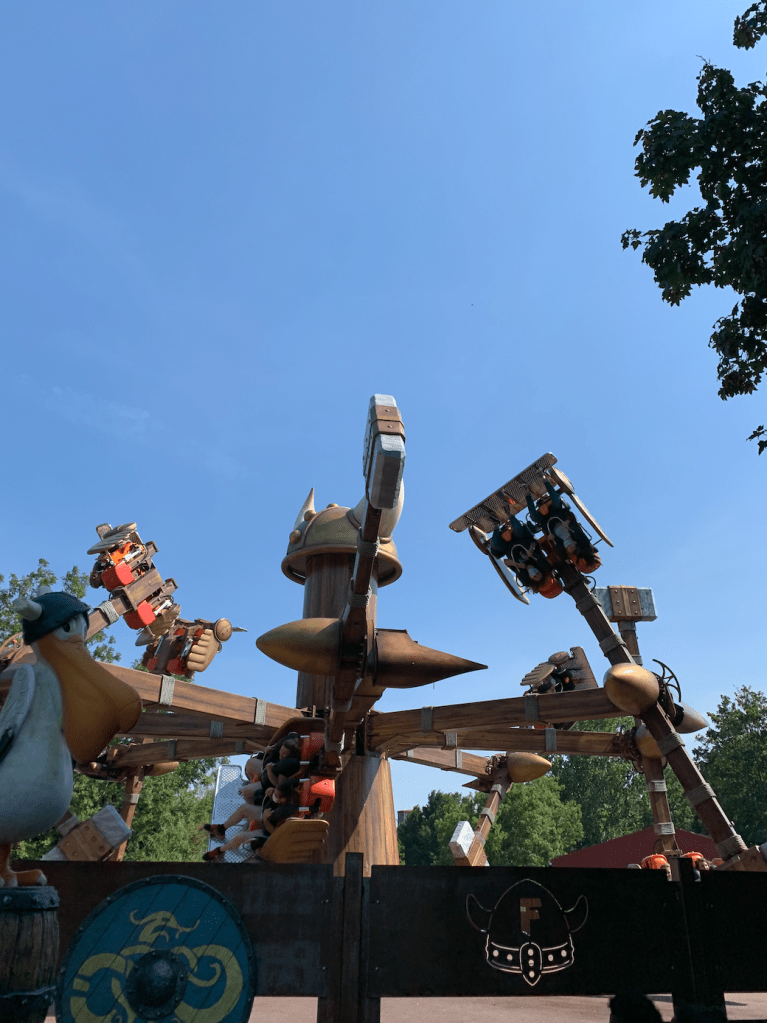
The next day we went to Festyland, an amusement park. We spent the entire day there going on rides. It had been so long since I’d been to an amusement park, so that was a lot of fun, too. 

On the 26th of August, it was a pretty rainy day at first, so Marie and I decided to go shopping (never a bad reason to shop!). In the afternoon, I got to meet Marie’s sister and later went out to dinner with Marie and her boyfriend, Clément. That same night we went out to a karaoke bar. There for several hours, we finally added our names to the list, of course singing Justin Bieber’s “Baby” around 1 a.m. The crowd loved it, I’m sure! I had so much fun at this place because half of the songs were in French and the other half in English, and as a listener of both English and French music it was great to know some of both.

The 27th of August was my last day with Marie. We spent the morning relaxing and getting ready and then went to the beach before I had to leave for Paris. Knowing Marie since 2017, it’s crazy how even though we see each other only about once every year, it feels like nothing changes! I am so so grateful for her and everything she has done for me:)

Next is the last but not least in the Travel Series: Paris!

Design a site like this with WordPress.com
Get started