Tips for Americans in Paris

Whether you’re visiting Paris for a short period of time or are planning on settling there for a while, I’ve gathered some of my tips and recommendations to share as resources for your time in this magical city. 

Let’s start with the more basic items to take care of. Make sure to pack outlet adapters or converters. Now you may be wondering, as I did, what’s the difference? Adapters simply change the shape of the outlet, so that you are able to plug in your two or three-pronged items into France’s circularly-shaped outlets. Converters, on the other hand, change voltage. This allows you to (safely) plug-in devices that may run on a different voltage than the outlet can handle. However, I would still be careful when using different voltages, regardless of having a converter. I learned this the hard way back in January, when my hair dryer started sparking while using it in Paris, and then had to be thrown away. I recommend being very careful with expensive hair devices, and if you are staying in Paris (or Europe) for a long period of time, consider buying the products there. 

My next piece of advice would be to plan for taking out money. You can convert dollars to euros in the airport, or there are places for conversion around the city, too, but *warning* these places charge a fee for conversion that makes it pricier. The airport is probably the most expensive place for taking money out, but it can be a helpful last resort. Personally, I got a travel credit and debit card that allowed me to take money out of an associated French bank with very little extra fees. BNP Paribas is connected to Bank of America, so if you are looking for a card I would recommend BoA (which you can then use at BNP in France!). There are other banks that have similar associations, too, it just takes some searching. 

I would also recommend familiarizing yourself with some of the customs and vocabulary of the country. The French don’t tip, and on escalators (if you are not walking) you must stay to the right side so others can pass on the left. The Metro does not open automatically for all carts, so you may have to push a button to get on or off. By being aware of small customs and basic terminology, the adjustment will be less difficult. Here are some words to know: 

Bonjour- Hi

Bonsoir- Hi (In the evening)

Merci- Thank you

De Rien- You’re Welcome

Pardon- Excuse Me

Sortie- Exit

Tirez- Pull

Poussez- Push

Also, if you are a student, bring your student ID card! Most places in Paris give discounts for students (or people under 26), so having an ID is always helpful to save money! 

Speaking of saving money, the app “Citymapper” is a great way to get around the city easily and inexpensively. It gives you numerous options of transportation to get to your destination, listing times and prices. This became especially useful to me in the month of January, when Paris was amidst its extremely long strike, as the app would include which Metro lines had limited hours. I used “Citymapper” in Paris and in Berlin, and I’d highly recommend it for any public transportation in major cities. 

If you are planning on living in Paris (or another foreign city) for a while, join an expat group on Facebook! I just recently joined the American expat in Paris group on Facebook, and while I do not currently live in Paris, I’ve learned so much from what other people post. It is a great resource to connect with others who have already gone through the shared experience of living abroad. 

To connect with even more people and in-person, my biggest piece of advice would be to attend an Erasmus event. Erasmus is a program designed to connect people of different cultures and from different countries. They have all sorts of events that you can attend to meet other people. I really wanted to do this after hearing about it from one of my favorite Youtube influencers Damon Dominique. Damon Dominique (https://www.youtube.com/channel/UCH5mdDlZ0haTodJmSxhst2w) lives THE life, he is an American living in Paris and he posts videos that teach you so much about the culture and lifestyle in France, at least from his own perspectives and experiences. His sense of humor and style attract so many people to his videos, which is why if you have a YouTube account and any interest in France, you likely know him. 

He promoted Erasmus in one of his videos, and I wanted to experience it myself. And of course, I made my best friend Amanda come along with me. We took the Metro, and of course the stop that we were supposed to get off at was closed, so we went to the next stop and walked back. When you purchase the ticket for the bar-hop events they tell you to meet the guide with an orange umbrella at the Metro station. So, we found the man with the umbrella (sounds sketchy but it wasn’t!) and he guided us to the first location. Upon arriving, there were only three people inside. Two of the people were from London, and the third was our friend Elizabeth who I had told to come join us. Amanda and I then went to the restroom and discussed how awkward this event would be with no one there. Although it didn’t feel like we were in the restroom for a long time, when we walked out the place was crowded (pre-Covid times), and we were surrounded by others to introduce ourselves to. We met SO many people from all over: England, Scotland, Ireland, the U.S., France, etc. It was so much fun. Throughout the night we kept following our guide to new locations and the night finished at a nightclub. When walking into this nightclub, we were greeted by a musician who we had JUST met a few weeks prior at a different place. What were the odds! Overall, for around 10 euros this was a great experience and I’d highly recommend Erasmus to anyone looking to meet new people while abroad. You can usually find the events on Facebook pages for Erasmus or online by searching for Erasmus in a specific country. That night, Amanda and I also met two French girls, Margaux and Eva, who we met up with a few times throughout our semester. They are the best, and we definitely made lifelong friends from this night. I’ll insert a photo of Amanda, Margaux, and I below. Margaux, if you’re reading this, je t’aime! Et tu me manques beaucoup. J’ai hâte de te revoir.

Alright, that’s all for now:)

À bientôt, 

Julia

A Small World

When I found out that I got into the University of South Florida’s Dance in Paris program, Karen Silverstein, my childhood dance studio owner and ballet teacher, mentioned to me that she knew someone named Cheryl Therrien teaching dance in Paris. One of my Hofstra dance professors, Dyane Harvey-Salaam, also mentioned that she had a friend named Rick Odums in Paris who owned a dance center. 

Fast forward a few months, I arrive in Paris, and I keep hearing about two specific places for dance. These centers seemed to be brought up quite a lot in discussions with the dance faculty and the rest of my program: the Conservatoire de Paris (Paris Conservatory) and le Centre International de Danse (International Center of Dance).

What were the chances that the two people I was supposed to meet while in Paris worked at/ owned these two places? While 3,000 miles from home, the world never felt smaller. 

Cheryl Therrien, who knows my childhood studio owner, amongst several other accreditations, is a former Cunningham dancer. She has remounted numerous works since then, and continues to teach across Europe and the United States. Her bio can be found on this page: https://dancingopportunities.com/workshop-cunningham-technique-with-cheryl-therrien/.

While in Paris, she works at the Conservatoire de Paris, something I did not realize until reaching out to Cheryl. Unfortunately, we did not have the chance to meet, and I was not able to squeeze in an observation at the conservatory, but I hope one day I will meet Cheryl in-person. At the Conservatoire, she works beside Nathalie Pubellier, who I was able to take choreography from in Paris before being sent home. In January, I also saw Nathalie Pubellier’s “Non, pas toi” performance. Not only does Cheryl know Nathalie, but she also knows Anna Chirescu, who was one of my ballet teachers abroad. Anna was in the new Cunningham film that recently came out, which Cheryl worked on, as well. As a program, we had the opportunity to go and see the film in the movie theater, and we saw Anna in it! The connections between Nathalie and Cheryl, Anna and Cheryl, and Cheryl and Karen truly made my circles all seem to intertwine.  

Rick Odums, who has danced alongside my Hofstra professor Dyane Harvey-Salaam, owns the Centre International de Danse. His bio: http://www.centre-rick-odums.com/en/rick-odums/. Thanks to Dyane, I was put in contact with Rick, who offered for me to come to his center. So before class one day, I took the trip to what Dyane called “Rick’s palace”.

From the street, you walk down a very long hallway before entering through the doors. Dyane was right, it really was huge! When walking in, there are several tables to the left that made it feel like a cafeteria. On the right, there were papers hanging on the wall, detailing schedules, classes, and other information. I walked up to a counter, where a girl pointed me to Rick, who was sitting at a table. 

He told me I could walk around and explore, so of course I took the opportunity to do so. On the ground floor where I was, a large window looked into a studio where a class was going on. I walked up and saw floors 2 and 3, each having multiple studios. Apparently, the top floor has classrooms, and in the basement is a recording studio. After my exploration of the studios, I came back downstairs and began asking Rick some questions. He told me about the history of the center and everything it has to offer. 

A long time ago, the location was a women’s prison. Eventually, people took it over and changed it into a dance studio. They brought in Rick a couple of times to teach there, but eventually they were kicked out for not regularly paying the rent. Eventually, Rick took over the space and little by little began renovations. He added a recording studio in the basement for additional training. The classrooms were added for dance history and kinesiology courses. 

Most of the students come right after high school. Three auditions are held at the end of the year. Prospective students must pass one of the auditions and then once accepted, share proof of their diploma with the center’s faculty. The center is like an American dance conservatory, yet some students decide to make it more liberal-arts similar, spending half of the day doing non-dance related school work. These students have an individual level for them. 

There are about 250 students my age at the center, and over 350 little kids, or “half-portions” as Rick called them. Students stay at the center as many years as they want, before usually attempting to join a professional company. During your first year there, you are placed for all of the dance courses. At the end of each year, you must pass exams in all courses in order to move to the next levels. The school year begins in September and ends in late June. During July and August, the off-months, Rick goes to the south of France, completely dividing himself from his dance life. 

The center has an international faculty and student body, although largely French. Classes are taught in French, and at night, the center has open courses for the public, of which Rick said he is not involved in. 

At the end of my visit, Rick said I could take his jazz class. Normally, this center is not open for outside dancers, except for the open classes at night. Therefore, I was overjoyed to have this opportunity. I took his Monday jazz class, which was extremely fun and challenging. Because they do not use air conditioning in France and it was a fairly hot day, I sweat more than I ever have. To Americans, the room would most compare to the feeling of being in a sauna. It was challenging both physically and having to follow along with some unfamiliar French vocabulary. But, I am beyond grateful to have had this experience. 

Lastly in this post, I wanted to clarify the French meanings of different dance genres, something I found very interesting as Rick told me:

In Paris, modern is used to describe Graham, Horton, Taylor, or the more codified modern vocabularies. Contemporary reflects abstract post-modern work. The French refer to our American contemporary dance (more commercial) as neo-classical ballet. Yet, at his center, contemporary is used as American contemporary, not post-modern work. 

From my own personal experience at Studio Harmonic, which may compare to a Broadway Dance Center of the U.S., the French also have a dance genre “Modern Jazz”, which in the classes I took ranged from very jazz-based, modern-based, or contemporary, dependent on the teacher.

Maybe you find that to be interesting as I did. If you have any questions or comments, please let me know! 

A picture I took on the street as I looked into the hallway that led to the center!

Live Culture

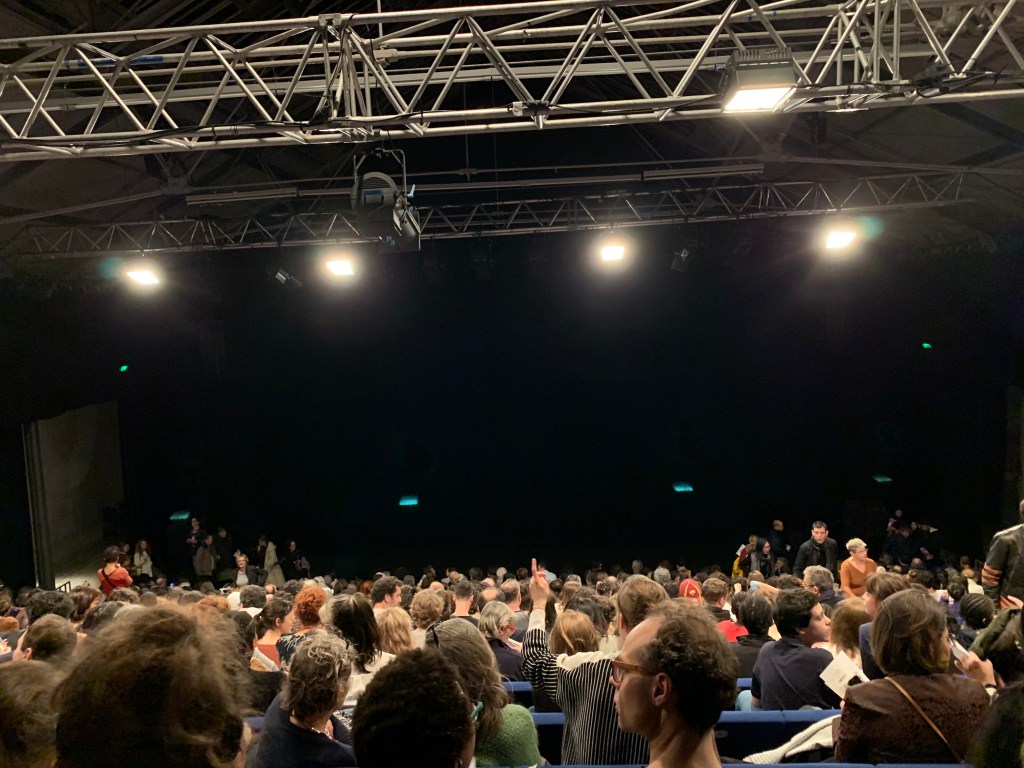
Participating in a dance program while in Paris, I had the opportunity to see a plethora of performances. Before being sent home, I was able to see twelve performances with my peers in a variety of locations in Paris. Each performance was so unique and unlike anything I’d seen in the U.S. 

The origins of dance, specifically ballet, in France are directly correlated to “high culture”. Louis XIV, le Roi Soleil (or Sun King), introduced ballet to the nobility as a way of establishing power. Through his performances, he made it clear that he must be respected and praised, both while dancing and not dancing. He instilled the idea that a sculpted body and daily training were of crucial importance. The better dancer you were, the more power you had amongst the upper class. I’ve written a lot on this subject which I will post soon, as I learned so much valuable and insightful information about Louis XIV and the Baroque era that I’d love to share. However, in this post specifically I’d like to discuss some of the biggest differences in performances that I saw between France and the United States.

Prior to arriving in Paris and having the opportunity to ask my dance professors questions and see performances, I had a false preconception of what the dance scene was like in France. Even though I had been to Paris twice before, I had never seen dance there, which allowed me to continue to unknowingly be ignorant on this subject until my spring 2020 semester. I somehow thought that dance was less popular abroad, and therefore it’s easier to get a job. I knew that the government supports the arts more than in the United States, but I didn’t know much about that, either. After just a few weeks in Paris, and asking a lot of questions, I believe that now I have a deeper understanding of the arts abroad. 

The government does provide grants for the arts much more so than in the U.S., yet getting one is definitely not easy, as there are so many other artists competing for the same pool of money that you are. One of my professors, Wanjiru Kamuyu, corrected me on some of my misconceptions after a World Dance class in January. As a choreographer and dancer, and a now solo artist, she elaborated on the challenges of acquiring money to create work. Without going into too much detail, I know that there was an extensive amount of work that went into submitting a proposal for her grant. 

However, for companies and artists that have earned some money, they have the ability to create more of a “production”. By this, I mean that there were often more props, staging, costuming, and elements that often made the dance performances feel more closely tied to theatrical performances. Props and sets that I couldn’t even have imagined before Paris seemed commonplace. I will insert pictures/video links below that illustrate this point. With more funding in the U.S. for the arts, potentially we could bring in elaborate performances like the ones that I saw abroad. And I don’t mean to say that it has never been done in the U.S., but I would argue that it is much more rare. 

These performances also made me reevaluate my understanding of what can be defined as dance. Previously, I had been used to seeing technical movements in pieces, and going into an American “modern dance” performance, I had an idea of what I would be watching that night. In Paris, with such extravagant performances, I really had no clue what each show would bring. Some of the performances didn’t even include a single movement that I could name with a dancer’s vocabulary. This made me think: What qualifies a work as a dance performance, or modern dance? And to be honest, I still am not sure I could completely answer this in a sentence or two. But, it surely is a question to think about and investigate with every dance piece that we see as artists.

Despite the shows that seemed to require lots of money to enhance the production, performances were fairly inexpensive abroad. The tickets usually ranged from 10 to 30 euros, which is nearly the same in dollars. Personally, I found this to be less expensive than seeing companies in the U.S. If I were to go see a modern performance in America, I would probably pay anywhere between $25 to $50. Not that the disparity here is crazy, but there is definitely a slight lowering of prices in Paris. The only place I did not notice a lowering of price was at the ballet. When I saw the Paris Opera Ballet, my ticket was relatively inexpensive, but I was sitting in the epitome of a nose-bleed seat. If you were to buy a ticket closer up, it would likely cost about the same as paying full price at ABT or the NYCB performances. The Paris Opera Ballet is the oldest ballet company and very well-known, so maybe this has something to do with the higher prices, but that is just a guess. 

Other differences I noticed in performances abroad were with the audience. In America, if you do not enjoy a performance, you sit through it anyways, and then reveal your dislike with friends and family afterwards. In Paris, if you do not like a work that you are seeing, you can leave. At a few of the works I saw, audience members would quietly stand up and exit the theater. It did not seem rude or bizarre to the crowd. This seems to be a different custom, and it may correlate to the inexpensive nature of the works, as people are more apt to leave not having spent a large sum of money. Further, the shows were almost always sold out, which, especially in the dance scene of New Hampshire, never happens. The members of the audience came from such diverse populations. I believe there is a stereotype to who attends performances in the U.S., and dance performances have less traction unless it appeals to the entertainment audience of commercial dance. In Paris, these stereotypes were completely nonexistent. Young and old, dancers and non-dancers, men and women, all of these crowds attended the performances that I saw. It was great to see such sincere interest and excitement for dance. And this excitement was especially noted in the applause that followed each performance. 

Applause in the U.S. in my own experience seems to last for about a minute; it really feels very short. Since attending Hofstra and seeing several performances in NYC each semester, I noted that applause at the ballet (both ABT and NYCB) lasts much longer than other shows in America. Yet, nothing prepared me for the applause in Paris. Applause lasted for what felt like an eternity, but was probably more like five minutes. For an audience member, that is a long time compared to what we grow up with. I even recorded the applause when I went to the Palais Garnier to see the Paris Opera perform Giselle, and it was six minutes!! Six minutes seems short, but try clapping that long and let me know when your hands start to tingle! The applause signals that the dancers should come out to bow again, so as long as the clapping continues, the company will continue to leave and return to the stage for several bows. Sometimes, it became slightly comedic seeing the dancers take the stage for their 10th bow, but it truly signifies the respect that the audience holds for the performance they saw. 

Respect for dance is something that I definitely felt to be stronger while abroad. I think many American dancers feel that when someone asks you what you want to be, and you reply with “a dancer”, it often comes with a follow-up question of: “And what else? How will you make money?” While yes, there is less money in this industry, dance is sort of regarded in a lesser way in the U.S. From my impressions in Paris, dance is a legitimate career path that is more well-respected. With that said, it is interesting that higher education in France does not offer many dance programs. There are a very limited number of places to study dance, one of which, the Centre International de Danse, I had the opportunity to visit thanks to Hofstra faculty member Dyane Harvey-Salaam. Stay tuned for my next post all about this visit!

Performances of my semester in Paris, France:

1)Yoann Bourgeois “Celui Qui Tombe”

Thurs, Jan 9, 8:30

5 Rue Curial, 75019

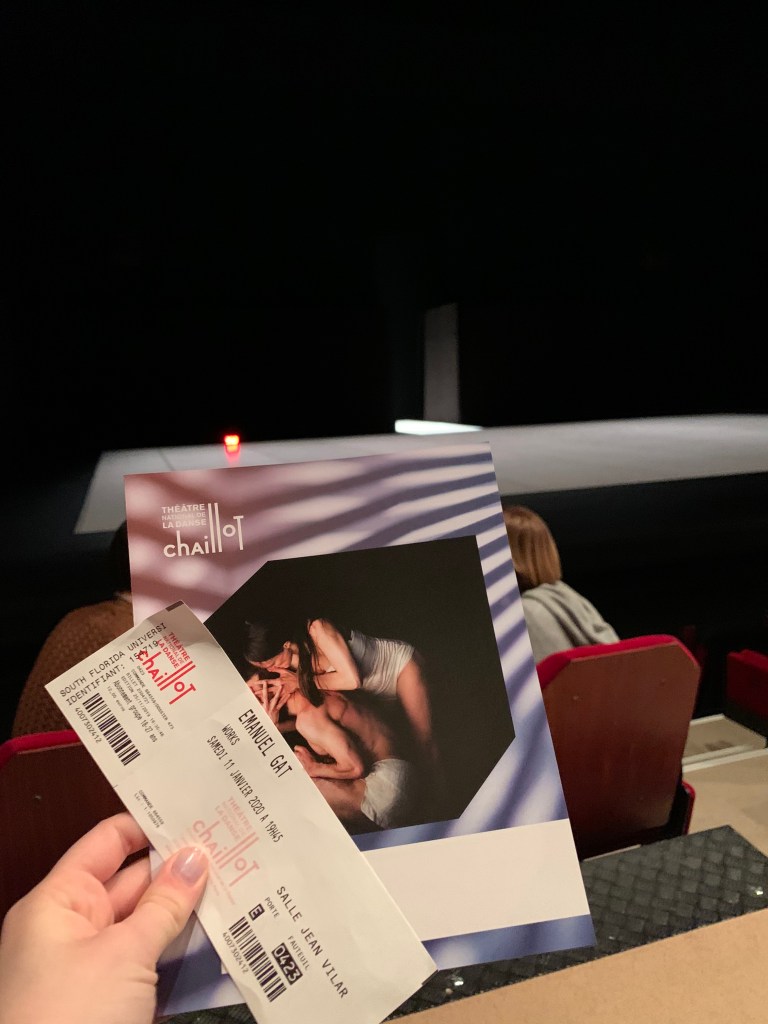
2)Emanuel Gat “Works”

Sat, Jan 11, 7:45

1 Place du Trocadéro, 75016

3)Nathalie Pubelier’s “Non, pas toi!”

Monday, Jan 20, 8:30

8-12 rue Bertin-Poirée, 75001

(No video, but she was my choreography teacher in Paris!)

4)Wendy Whelan and Lucinda Childs “The Day”

Sat, Jan 25, 8:00

Théatre de la Ville, 2 Place du Châtelet, 75004 

5)Peeping Tom’s “Kind” (Child)

Wednesday, Jan 24, 8:00

1 Place Salvador Allende, 94000, Creteil, France

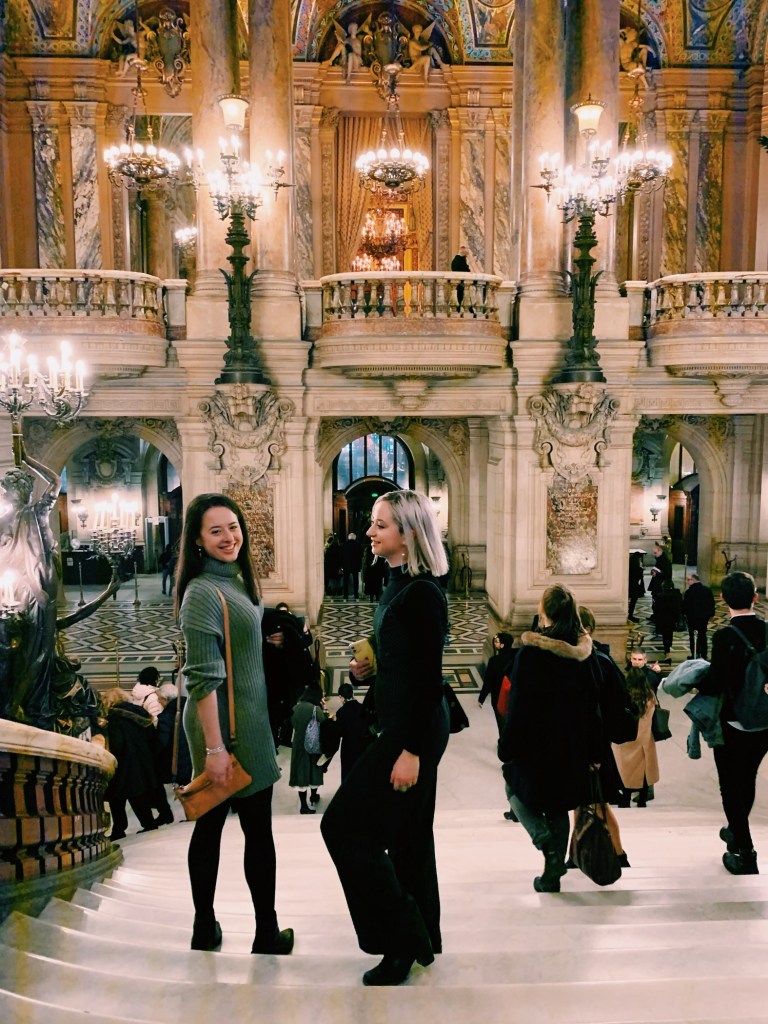
6)Paris Opera Ballet Giselle

Sunday, February 2nd, 8:00

Palais Garnier

https://www.youtube.com/watch?v=3tOziQuNKPg (A video on the Paris Opera).

7)Eva Yerbabuena’s “Cuentos de Azúcar”

Wednesday, February 5 8:30-10

Théâtre National de Chaillot, 1 Place du Trocadéro 75016

8)Anne Teresa de Keersmaeker’s Fase

Wed, February 19, 8:00

Théâtre de la Ville, 75008 Paris

(I’ve written a bit about this show that I will post soon and link here!)

9)Christos Papadopoulus Elvedon Ion 

Saturday, February 22nd, 5:00

31 Rue des Abbesses, Montmartre, 75018 Paris

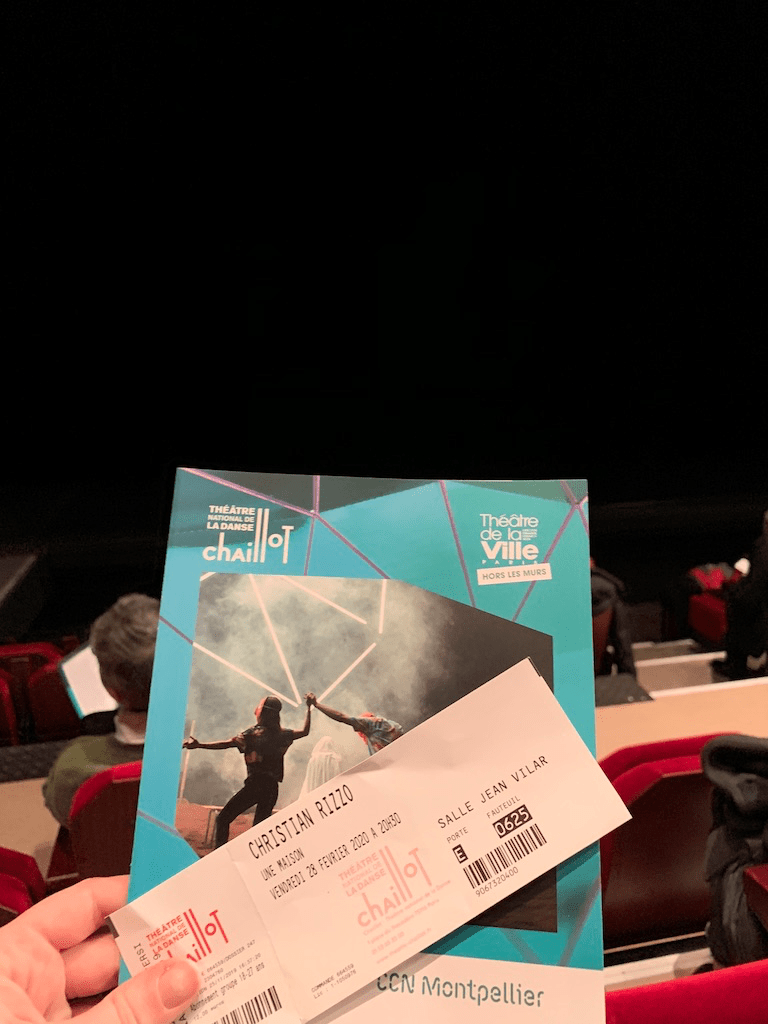
10)Christian Rizzo Une Maison 

Friday, February 28nd, 8:30

Théâtre National de Chaillot, 1 Place du Trocadéro 75016

11)Damien Jalet and Kohei Nawa Vessel 

Wednesday, March 11 9-10

Théâtre National de Chaillot, 1 Place du Trocadéro 75016

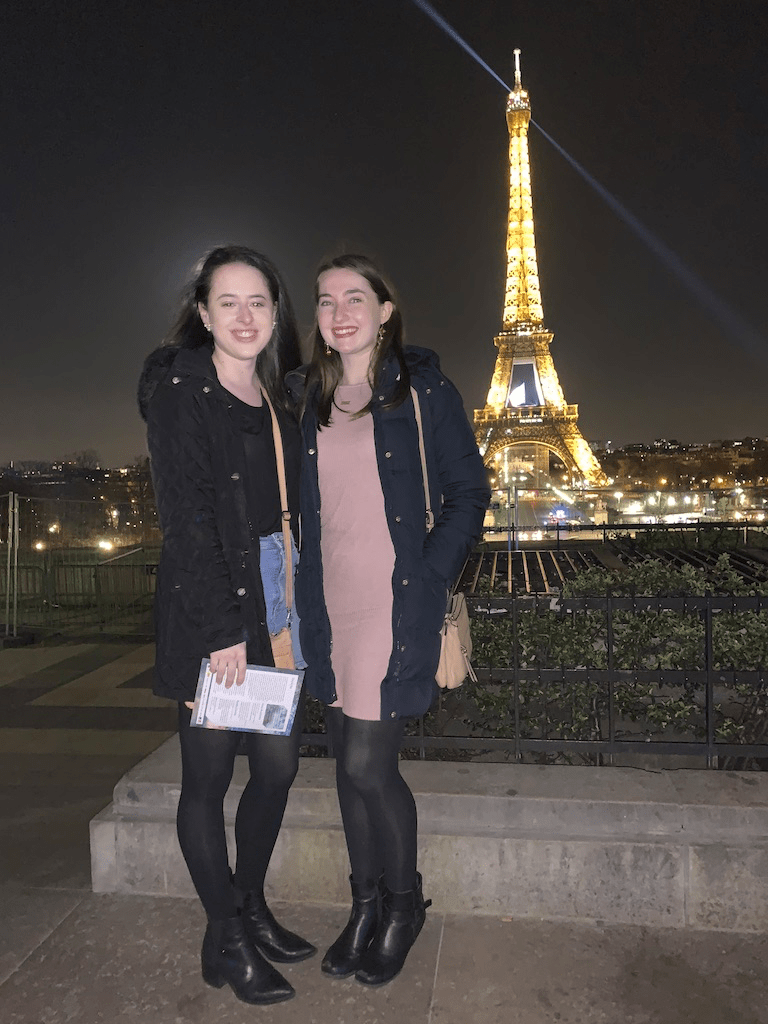
The Chaillot Théâtre was one of the most amazing places, overlooking the Eiffel Tower!
Meeting Damien Jalet!

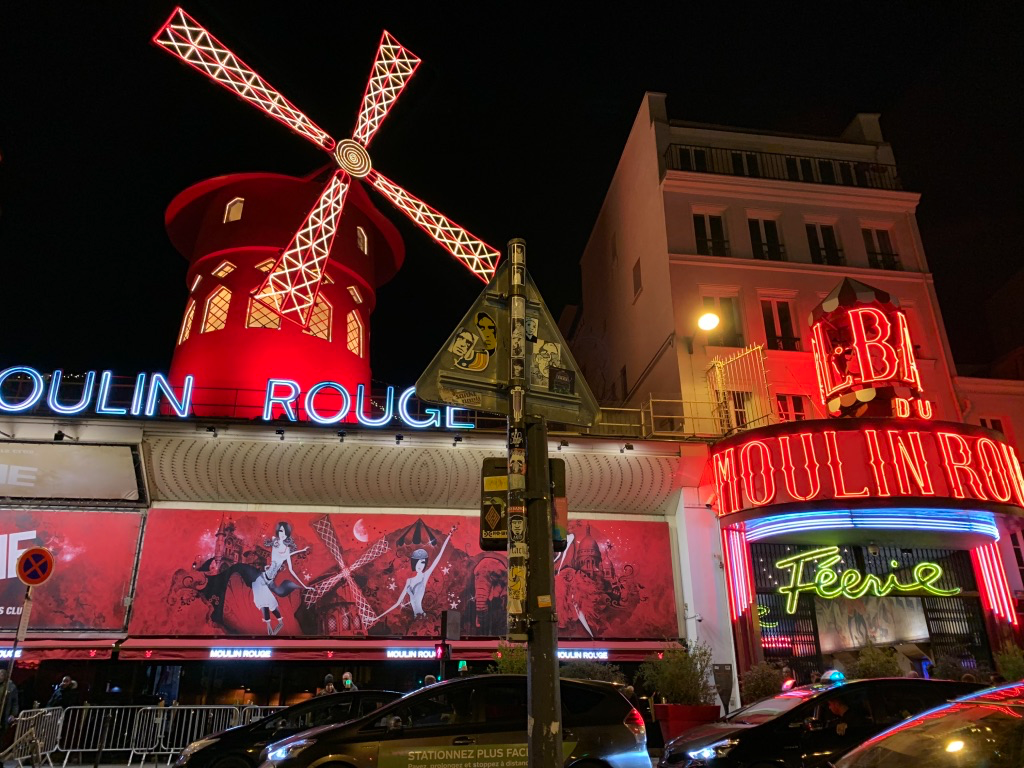
12)Moulin Rouge

Art & Culture in Paris

During my two months in Paris, I visited eight museums, a number not even comparable to the total that exists in this beautiful city. Fortunately, my student visa got me into most of them for free! If not free, my visa made most activities discounted, which is a fantastic perk for students exploring Paris. 

As an artist myself, I have the utmost respect for the arts. However, one of the many things I learned about myself while abroad is that I definitely enjoy contemporary visual art more than some of the older works that I saw. Out of all of these fabulous museums that I visited, my favorite was by far the Atelier des Lumières, or the workshop of lights. 

I had been wanting to go to the Atelier des Lumières since my arrival in Paris, after hearing so many good things about it from Damon Dominique, an American expat living in Paris. He is a YouTuber who has a work visa to make videos about France or in French. I would definitely recommend watching his videos if you’re curious to know more specifically about Paris, or if you simply want to hear the French language! 

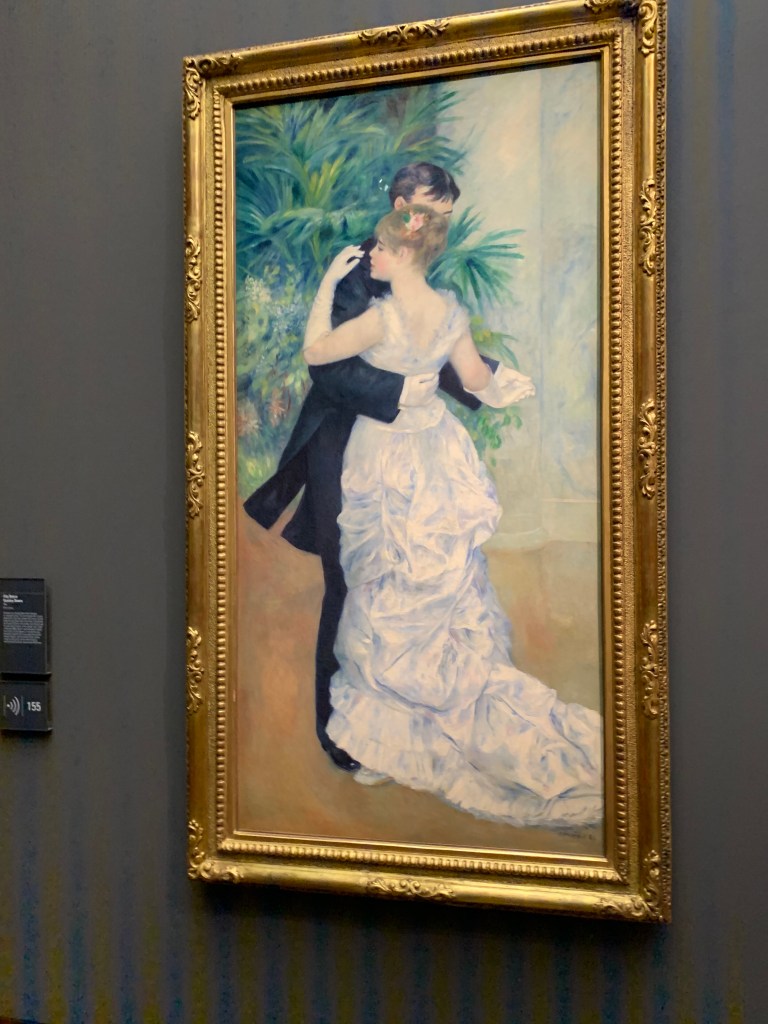
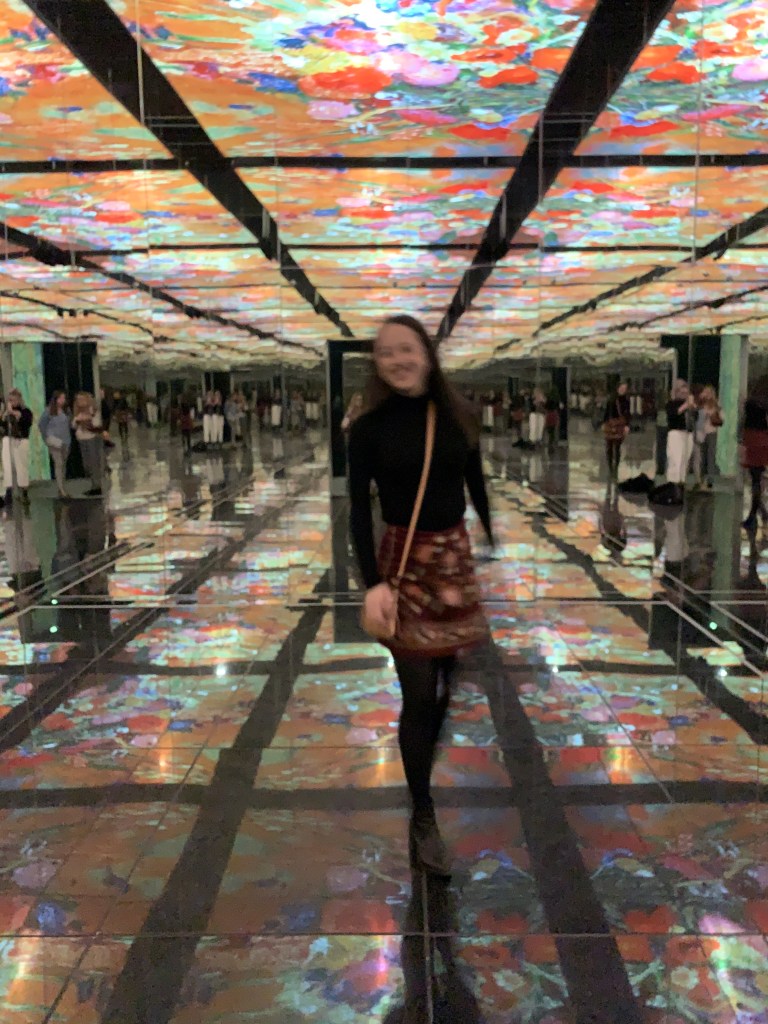
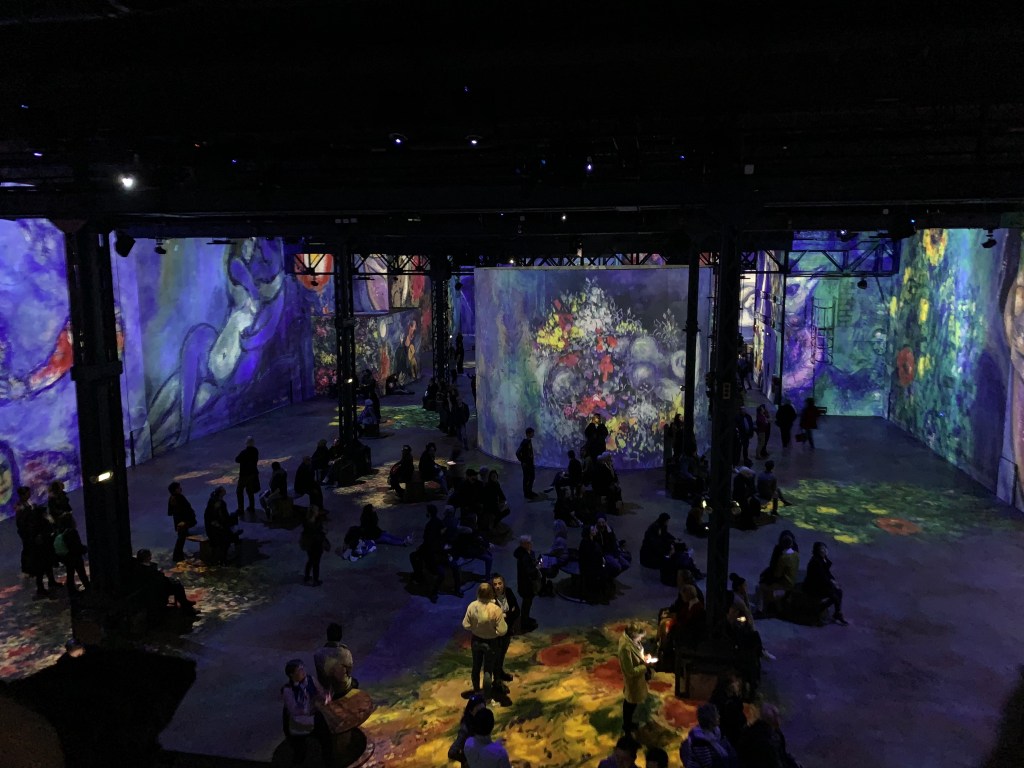
While the word “museum” is not directly in the title, the Atelier des Lumières is in essence a museum where the work performs. When you enter, you walk into a dark room where a series of exhibits are shown in the form of light projections on every surface that surrounds you. The floor, ceiling, and even the people that roam the room are covered in light while music plays. On March 13, I was able to see the four exhibitions that the Atelier offered: “Monet, Renoir and Chagall” by Gianfranco Iannuzzi, Renato Gatto, and Massimiliano Siccardi, “Infinite Blue” by Yves Klein, “Moments” by Melt, and “Journey” by Nohlab. My time at this museum probably lasted an hour and a half. I think the reason this particular museum stood out to me was because it made visual art a performing art. This transformation between two worlds of art was magical and inspiring. As a mover, I appreciated this spin on seeing visual art works. Personally, it made the works more tangible-feeling and relevant. It brought works of the past, especially in the “Monet, Renoir and Chagall” exhibit, into a more modern, present-day illustration. And interestingly enough, a few weeks prior, my program visited the Musée d’Orsay, where we were each assigned an artist to investigate. My artist was Pierre-Auguste Renoir. Seeing the works I had observed at the Musée d’Orsay by Renoir come to life at the Atelier was magnificent, and again something I may never be able to accurately encompass in words. I’ll insert pictures below, although they will not compare to the real experience. It was one of my all-time favorite locations, and if you are ever in Paris, I would absolutely take the time to visit. 

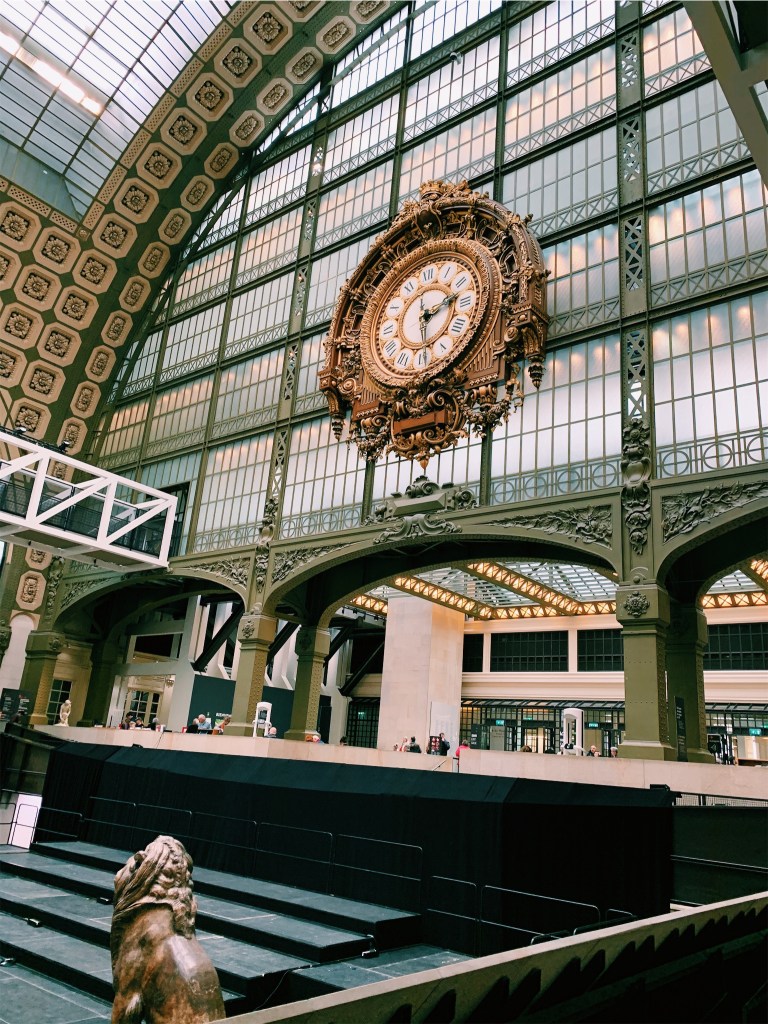
Speaking of the Musée d’Orsay, again from the list of museums I visited, this one probably spoke the most to Paris. Previously the Gare d’Orsay, a train station, this museum transformed and by 1986 became home to a collection of works from the Impressionist movement and more. Artists such as Degas, Manet, Monet, Van Gogh, and Renoir, fill the museum that overlooks the Seine River. Not only does this museum house many French works between the mid 1800s and early 1900s, but the structure of the museum itself is recognition of the former Orsay station, drawing on the past of Paris. The clock that has become the symbol for this museum is the original station clock, and again the architecture and location by itself is a historical work. I felt the most connected to Paris in this museum. 

One museum I wish I had gone to is the Musée Carnavalet. This museum is about the history of Paris. I never made it here, but I wish I did, as I would have loved to learn even more about the city that I was living in. And I am sure I walked by this museum a million times, because it was in the Marais district where my dance courses were! Well, now I guess I just have to go back!!


I would recommend any of the museums below if you are ever visiting Paris. You can search days when they may be discounted, or on the first Sunday of every month there are an endless number of free museums to go to. Each has something different to offer, and even if you may not love visual art, you may find interest in places like the Atelier des Lumières, where the artwork comes to life. There are so many wonderful museums to explore in Paris and I only wish I had more time in this city to see even more.

Museums I visited:

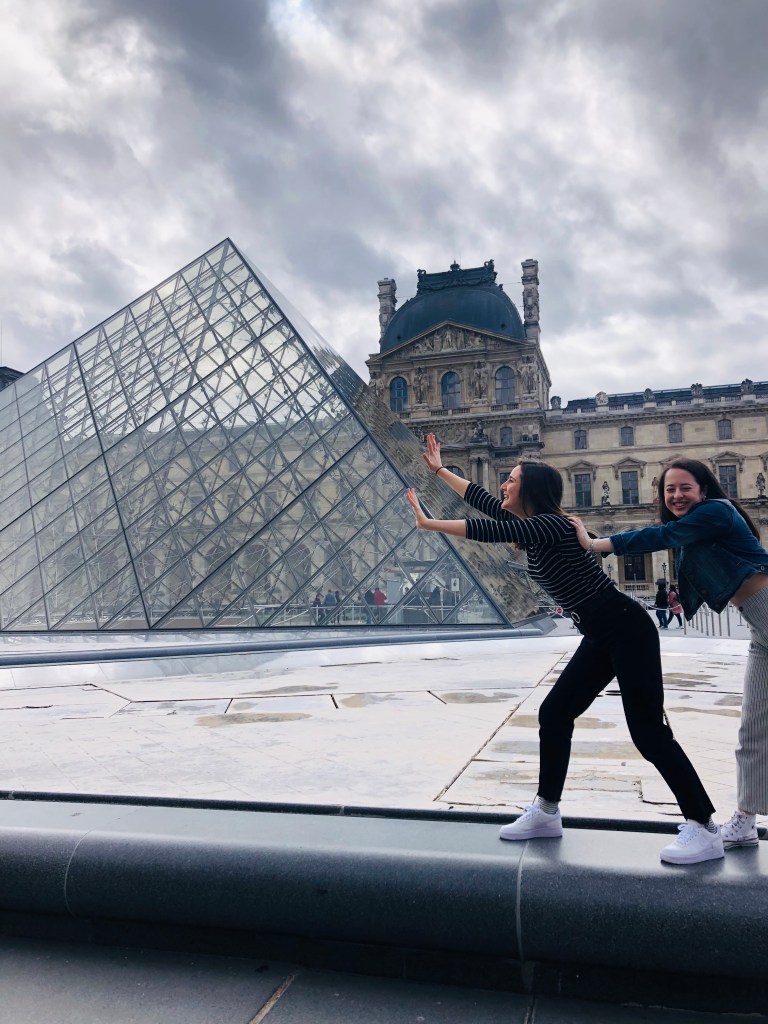
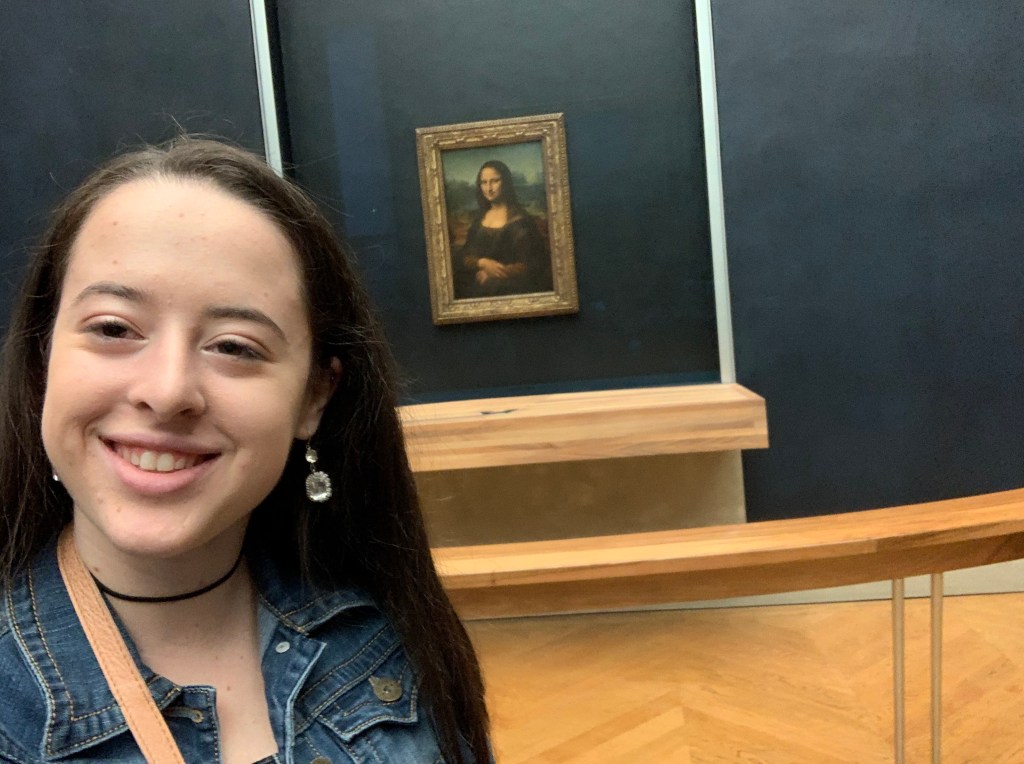
-Le Louvre

-Musée d’Orsay

-Musée d’Orangerie

-Jeu de Paume 

-Le Centre Pompidou (I didn’t take any photos here- although it is an amazing museum/library/café – look it up if you are interested!).

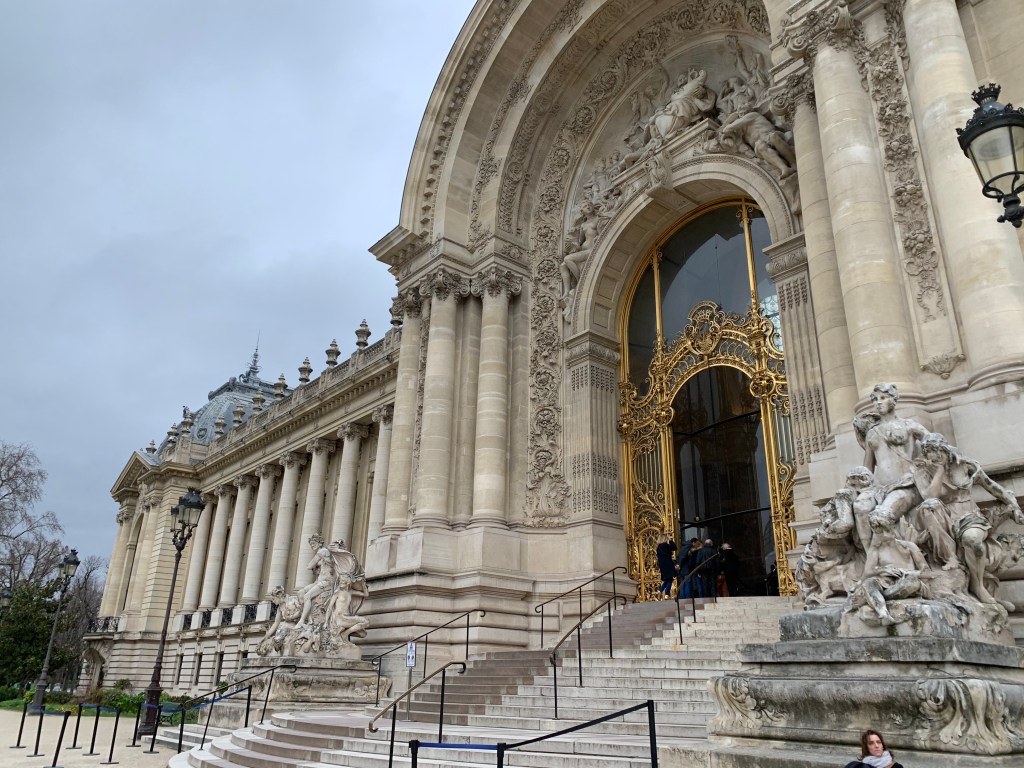
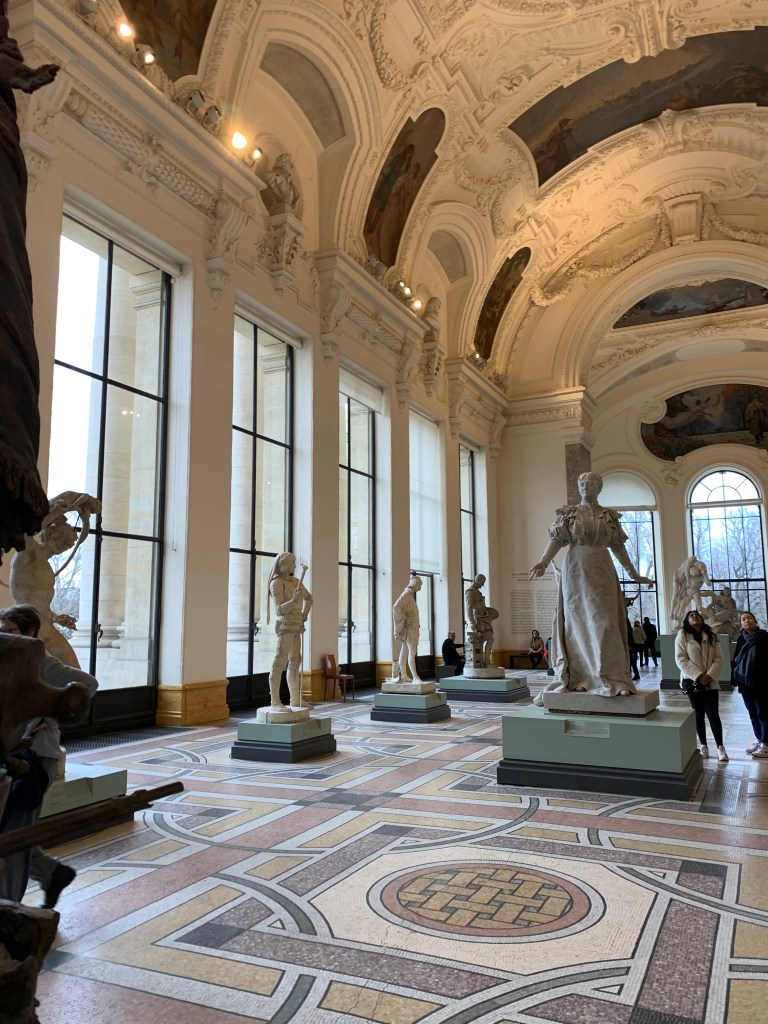
-Petit Palais 

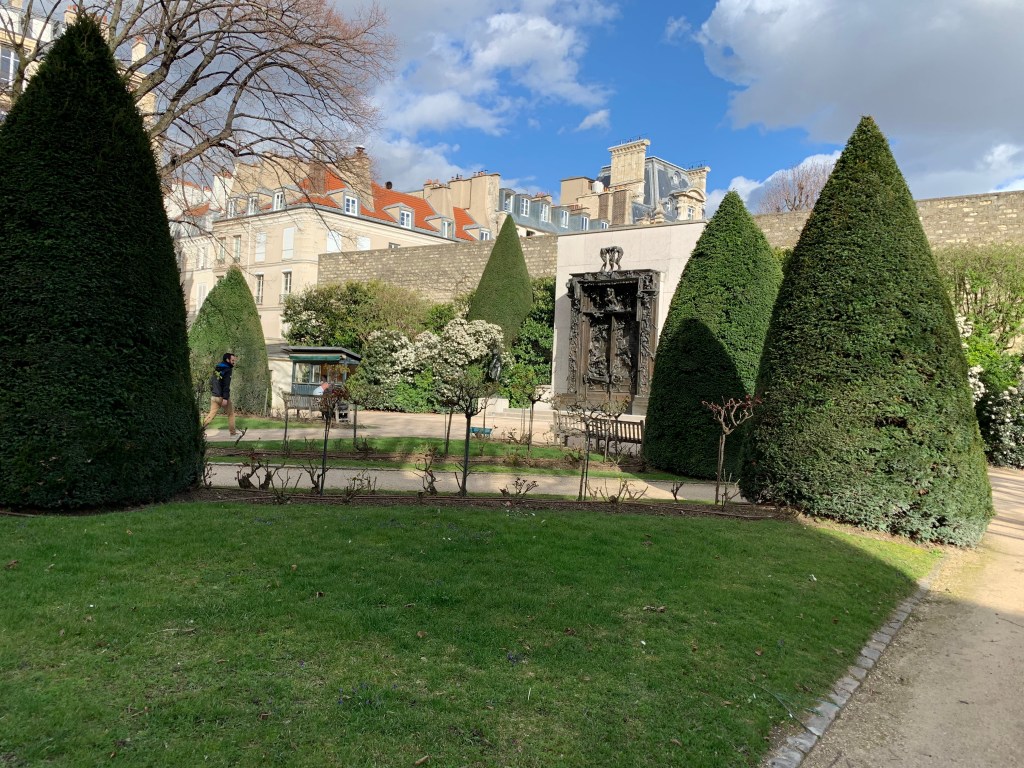
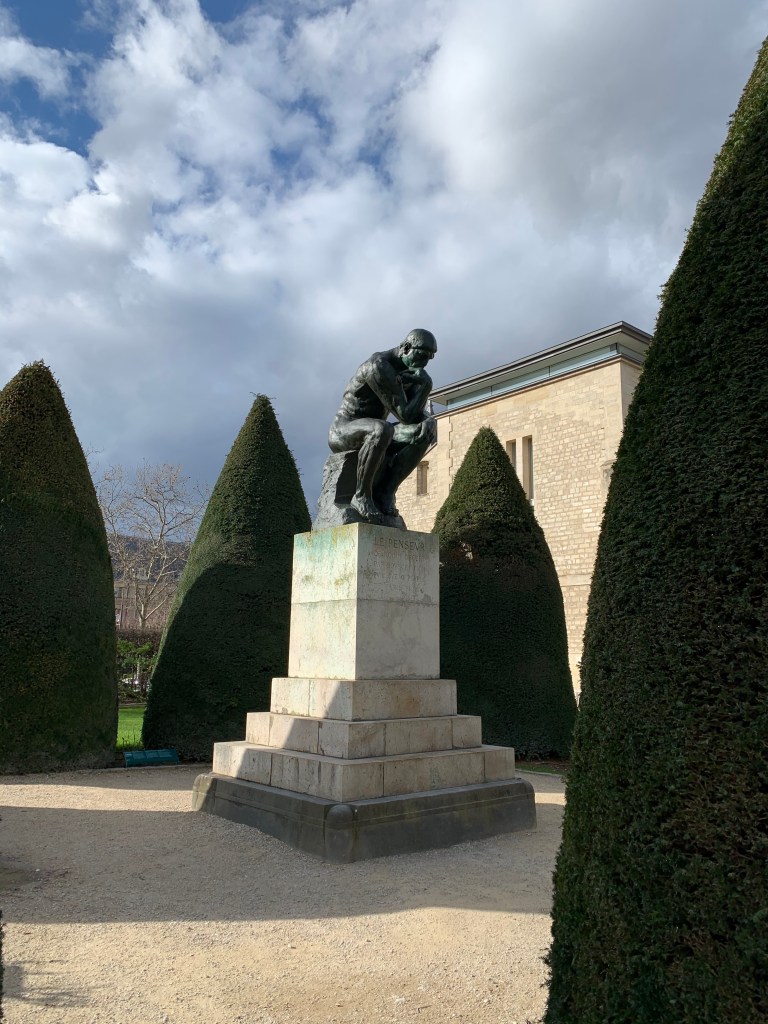
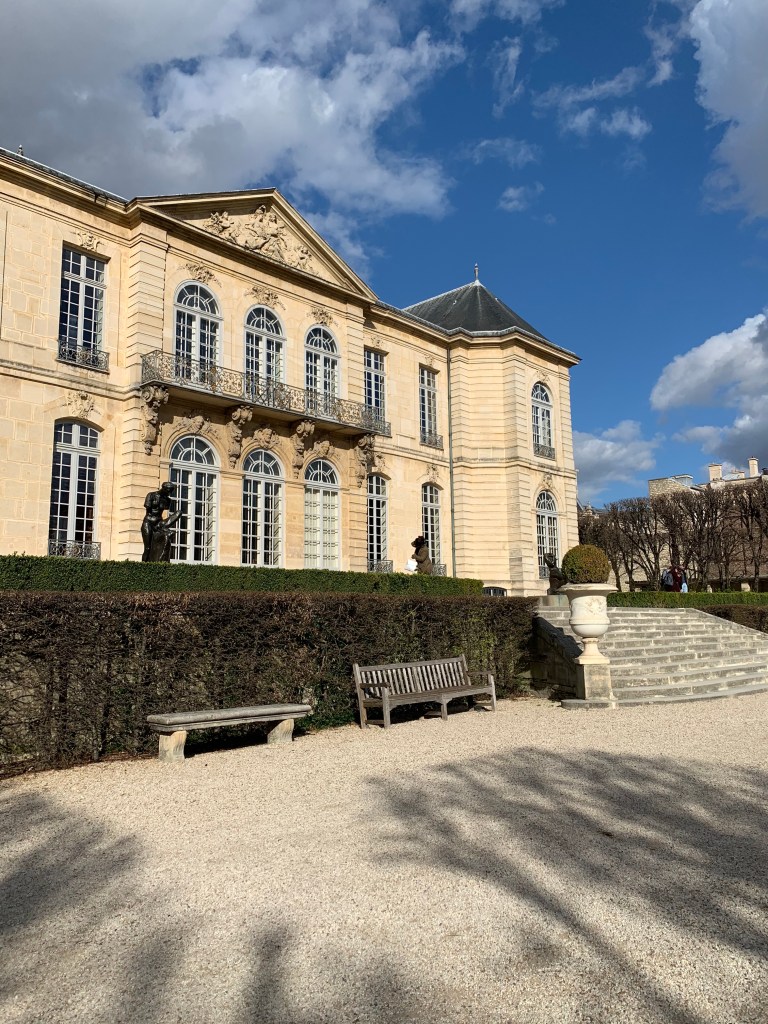
-Musée Rodin

-Atelier des Lumières

Everyday Life

(Hi everyone! I am going to be periodically posting the blogs that I wrote, but never shared, while in Paris over the next week or two. Enjoy!). 

Here in Paris, I share an apartment in the 12th arrondissement with five other girls in my program. I love the apartment, it has three bedrooms, two bathrooms, a nicely sized living room, a dining table, and a well-equipped kitchen. My routine definitely changes from day to day. With a destabilized schedule, everyday we have different classes at different times. The irregularity of my days keeps my weeks exciting, as there is always something new to look forward to. However, most days consist of a dance class or two and then some sort of exploration in Paris before returning home for dinner. 

There are so many differences between Paris and the U.S., but here are some of the ones I’ve found to be important:

  1. Restaurant Culture

The entire culture of eating out is different in Paris. Usually in America, when I plan to go out with my friends, I “schedule” about two hours max, thinking that I will be at the restaurant no longer than an hour and a half. I notice when planning meals with friends in Paris, I schedule four hours because I am often at the restaurants for at least two. As an employee at a restaurant in America, I can confirm that the U.S. culture is about rushing customers in and out. As a hostess, I am always searching for which tables look nearly finished in order to plan where the next customers may go. As bad as it is to say, sometimes when the restaurant has had a two hour wait, the servers and I have removed plates from tables in order to politely prompt the customers to wrap up. The French would never do this. With so many restaurants and cafés within walking distance, there is hardly ever a wait. The waitstaff never rush you out, instead they leave you alone until you ask for the check. You could sit for hours conversing before asking for the check, but once you do ask, it is expected that you finish up and leave. In addition to this, another difference in restaurant culture is that the French do not tip. Sometimes, I will leave extra change for exceptional service, but more often than not, I walk away paying exactly what the total is. Because of this, servers do not check on customers unnecessarily as we see in the U.S. Sometimes, the servers may come off as cold or not caring, but I believe this is simply because they do not have to please or extend themselves for the customers. The food does the work on its own to attract people, not the waitstaff. When the servers do come over to you, at least in my own experience, you order drinks and food at the same time. They don’t make as many trips to the table as U.S. servers are expected to, and ordering in one visit exemplifies this. Another major difference in the eating-out culture is with take-away. This is extremely less popular in Paris than in the U.S. If restaurants do have “to go”, they usually advertise it on the outside of the place, because it may be an additional selling point. Fast food chains offer “to go” or à emporter, but this is definitely not conventional for most restaurants, and take-away cannot be expected anywhere outside of Burger King and Mcdo (the French nickname for McDonalds). Another difference I’ve noticed in Paris involving eating out is the ability to modify the menu. In the U.S., I’ve been raised in a culture in which modifying the menu is absolutely acceptable. You can request something be removed from a meal, added, or even ask for something not listed. And, for the most part, the restaurant will provide you with what you ask if it’s possible. In Paris, modification is looked down upon. Because of how highly the food is regarded, changing the menu is insulting to the chef. Unless it’s for allergy purposes, you should not ask to change the food at all. I learned this the hard way a few years ago in northern France, when I went out to dinner with my friend and her French family. When I asked for a plain burger without the toppings listed, the server reacted a bit, and her mother had to explain that I was American and did not know any better. After this experience, I never asked to modify a French menu again. If I do not like something, I can modify it myself by not eating that item. The last difference I’ve found here in Paris is that there are no hostesses. Most places are seat yourself, or a server will lead you to a table. However, I have yet to see a dedicated hostess position in a restaurant. In addition, when I visited London and Scotland, restaurants did not have a hostess, either. Maybe this is a European standard. These are the biggest differences in restaurant culture that I’ve noticed between Paris and the United States. 

  1. Grocery Shopping

Grocery shopping is another very big difference between Paris and the U.S. Walking into grocery stores, they are a lot smaller than what I am accustomed to at home. There are fewer aisles, fewer registers, and fewer employees. There are three major grocery stores that I find myself at: Franprix, Picard, and Monoprix. Franprix is the one I visit most often, as there are numerous locations in very close proximity to my apartment. Monoprix is the bigger version of Franprix, but it is a bit farther from me, so I go there less. Lastly, Picard is a store for frozen meals. I go here for quick dinners and any frozen foods. One big difference that I’ve seen in customers at grocery stores is that it seems like people shop for a day or two, leaving with no more than two large bags full. In America, people leave with dozens of bags, filling cars. Even in my own household, when my mom usually gets home with the groceries, it requires several trips from the car to the kitchen, with every family member helping to carry bags. In Paris, whoever does the shopping carries their bags from the store to their home. I never see people checking out with a massive amount of items. Over time, I’ve learned to shop more frequently to avoid looking like an American when leaving a store. Not only do people usually leave with less items than in America, but the aisles are generally less stocked, too. Granted, nothing ever looks bare or low in supply, but there is less quantity per each item. In my home grocery stores, I am used to seeing twenty types of cereal, ten bread choices, and infinite selections and varieties. In Paris, the selection is limited. You always find what you want, but there are not thirty options of the same food. I prefer this, because it feels less wasteful and it brings the stores closer to having just necessities, something Americans could work on. Reusable bags are another big difference, as Paris charges for bags in stores, which motivates people to be more environmentally friendly. At the beginning of the semester, I bought a reusable bag which I use all of the time. I think this enhances the “lighter” shopping, as people can only buy enough to fill their reusable bag or two. From my own experience, you always bag your own items, too. Speaking at least for these three stores, they don’t hire people to bag, so instead each customer bags themselves while the cashier scans the items in. At times this can be stress inducing, as you have to finish putting everything in a bag before the cashier asks for the money; it’s a bit of multitasking. Those are the most prominent differences in the weekly, or daily, task of grocery shopping.

  1. Sundays

Sundays are completely different than they are in the United States. In Paris, Sundays are meant to be spent with family. It is a day for Church, taking walks in parks, and spending time with others. Grocery stores are either closed or open for very limited hours. I quickly learned this because at home, Sundays are usually my family’s shopping day. The first few weeks in Paris I had to readjust, as I could no longer get food on Sundays. Even clothing stores and restaurants are hardly open on this day. Hours for everything completely shift, and after 2 pm, you cannot expect anything to be open. It becomes a ghost town for stores, yet people fill the streets with their families. As much as it was an annoyance the first month of being in Paris, I respect the fact that the French prioritize this time away from work. This reflects the clear separation of on and off time. When the French leave work, there is a clear finish to the job. They are not “on-call” like Americans are, where even at home people work; instead the French divide home life and work life, especially on Sundays when many workers are not needed.  Again, as Americans, this is sometimes a hassle, having to deal with not having immediate access to everything at all times, most notably on Sundays. Yet, it is part of the quality of living that the French have mastered, and I have learned to appreciate it. 

As for my everyday living, these are definitely the biggest differences I’ve had to accommodate to while living in Paris. There are dozens of smaller differences, including no drying machines, hardly any elevators, different floor numbering (the U.S. second floor is the French first floor), lack of A.C., and the obligatory greetings (you must say Bonjour/Bonsoir when entering anywhere), but these were less of an adjustment than the ones above. Overall, the differences in everyday life have been fascinating to learn about and practice, and it gives me much more gratitude and appreciation to be living this lifestyle and learning more about this culture that I love.

La Qualité de Vie

As an American, I am sure you’ve heard, and probably used the saying “quality over quantity” before, right? Well, after one month of being in Paris, that saying seems far more suitable here. Despite the countless boulangeries (bakeries) everywhere you look, and the infinite cafés and restaurants, there is not too much done in excess. There seems to be an order and reason behind the way of life that adds efficiency and quality to the (Parisian) lifestyle. Even McDonald’s is better quality in Paris, not that I would know, but a good friend of mine just LOVES their potato wedges 😉 The Frenchies really put quality over quantity, or as they might say, “la qualité vaut mieux que la quantité.” 

Quality is very important; c’est trés clair. Imagine: You wake up in the morning and walk across the street to the bakery. After saying “Je voudrais un pain chocolat et un chocolat chaud,” and spending around 2-3 euros, you walk away with one of the best chocolate croissants and hot chocolate you’ve ever had. You exit the bakery and while walking down the streets, you would actually have to search the ground to see any litter, and even then you may not find any. When out to lunch with your friends, the portions may seem small from an American perspective, but you never leave hungry. The presentation of each meal is always purposeful and elegant. After two hours of nice conversation with your friends, you ask the server for the check.. There is never a rush in restaurants, which is why the waitstaff doesn’t bring the checks over. Yet, there is never a rush to get anywhere, really. The only time I ever see people running here is to get on the Metro before the doors close. Anyways, after getting l’addition (the check), you leave the restaurant. Later that night, you go to the grocery store and there is one woman cashing people out. At most stores, there are only a few registers and minimal workers, again reflecting upon the desire to not be excessive. 

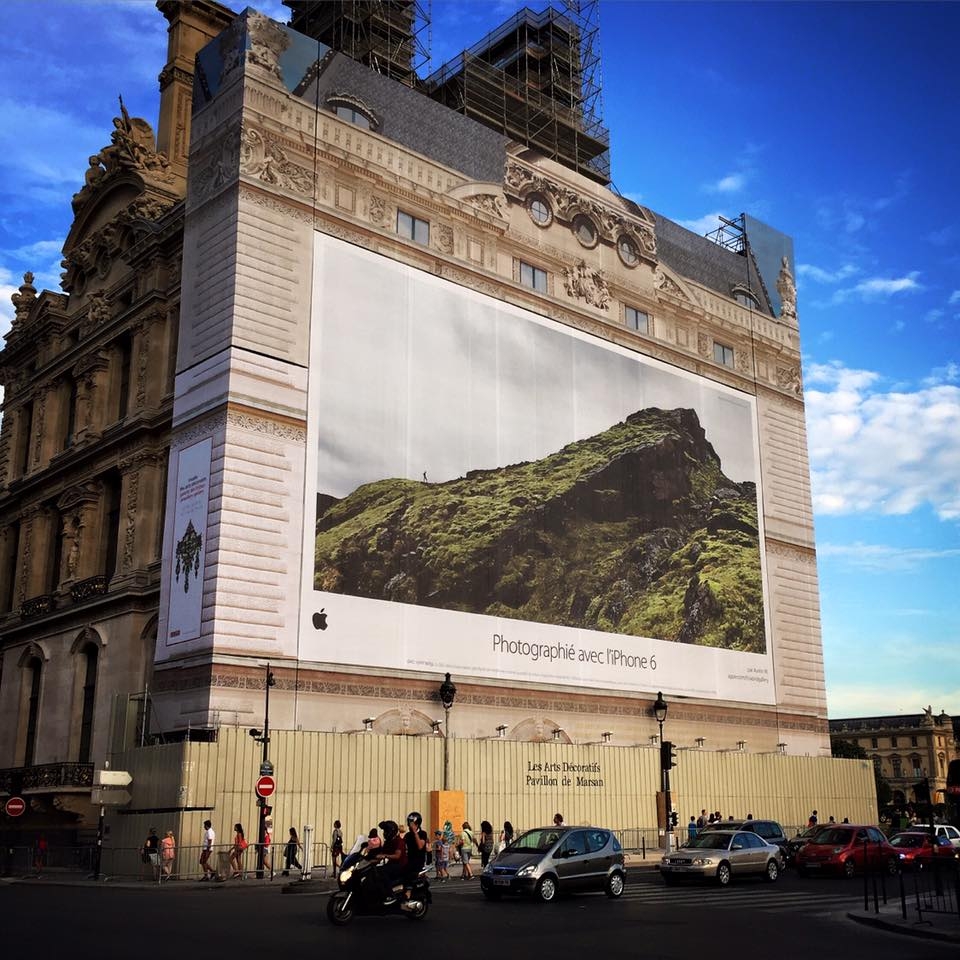
A final aspect of quality that has really struck me this past month is that not only are the buildings and architecture so extremely beautiful, but during construction, they will cover it up with something more pleasing. The first week that I was here, while walking by a huge building (I wish I knew what it was), I saw an Iphone billboard that felt so out of place. One of my friends told me it was to block the construction behind the billboard. In my personal opinion, in the United States we would not care that much to make the outside look pretty. Another example, in 2015-2016, one area of the Louvre was covered with paintings of Austin Mann for some time, again hiding construction with pleasing paintings of nature. There is a sense of more class and attention to presentation, which the French appreciate through the relaxed, unhurried nature of their lifestyles here. 

While only here for a few fast-flying weeks, my admiration for this country and the quality of living here has only grown. There seems to be a purpose for how the French lead every hour of the day, and there is always so much to do and see. Of course, there are problems with the country just as there is any other, and sometimes there are inconveniences, but I have found respect for all of the differences whether I like them or not. I cannot wait to continue learning about the lifestyle and culture here over the next three months. 

À la prochaine, 

Julia

Design a site like this with WordPress.com
Get started